Showing posts with label Take A Chance 3. Show all posts

Friday, October 14, 2011

Seeking Out Misery: Room

RoomCover.jpgHave you ever felt so happy you could burst?  So filled with joy that your life was actually in danger? Worry no more, because any page of Emma Donoghue's Room is guaranteed to bring enough sorrow and gloom that explosions of happiness are right out.

Maybe I'm particularly vulnerable to her story because I like kids; both mine and all the ones I meet in the halls of their school.  The five year old Jack has spent his entire life inside the tiny room that his mother's captor built to contain his prize.  Although a bright kid, his lack of experience severely skews his expectations and conclusions about the world he finally meets Outside.  His mother has built her entire life around keeping him happy, secure, and away from the evil man who imprisons them.  They are highly magnified versions of every kid and mom -- the child whose mind often surpasses their knowledge, and the parent who bends over backward to make the world a safe and welcoming one for her family.

Donoghue paces the book carefully, showing us Jack's world and his place in it, then placing it in jeopardy both literally and emotionally, and then breaking him out in several stages.  Again these are highly magnified versions of real emotional checkpoints -- five year old Jack has to go out on his own, but instead of heading for kindergarten he has to fake his own death and escape from a sadistic kidnapper.  Although there are a few lapses into melodrama, overall the book kept a firm grasp on Jack and his emotions, a slightly looser hold on his mother, and a constant deep sadness for this reader throughout the entire read.  So a good book, but not for the sad-hearted.

Sunday, October 2, 2011

October Book Club: The Snow Goose


Family book club faced a crisis last night -- several members had not finished the September book.  Through adroit negotiations I negotiated a solution -- P picked the October book (short) by virtue of us having read it together over the past few weeks, X quickly read it, and we headed out for sushi to much rejoicing.  Paul Gallico's The Snow Goose, illustrated by Beth Peck, provided a full meals worth of discussion and tangents, so I declare the intervention a complete success.

X officially disliked the book, shocked at the unhappy ending.  The protagonist dies at Dunkirk, leaving the young girl bereft, and the goose disappears forever.  P also expressed his dislike for the ending.  I pushed the issue, asking what would happen next if the guy didn't die, and we got into a discussion of the creepiness factor of old people (really old -- some over 30!) who fall in love with children and then the children grow up to marry them.  All three of us find that very disturbing.  I mentioned Emily of New Moon's Dean and Bella's daughter Renesme as examples of creepiness in literature, and the boys declared that they currently had no teachers they intended to grow up to marry, which I applauded.  So I said that maybe violent death was the best place for this book to go, since a reunion between girl and old guy could only be creepy, but at that point their love was still innocent.  X seemed interested by the idea that death could be the happiest ending for a book.

We also talked about Dunkirk and World War II a bit, and the boys even put up with me reciting a few lines of Robert Nathan's Dunkirk and we talked about the battle and about the difference between the snow goose imagery and the idea of the ghosts of English admirals helping the kids bring their boat home safely.  We talked a bit about Peck's paintings, which P and I had scrutinized as we read the book; X had assumed that the book was a collaboration, with the story and the illustrations informing each other (the story came first by many decades).  And I ate a Hella Hot roll (yum) and we all declared ourselves happy.

Monday, August 8, 2011

Loyal Reader Me: Dreadnaught

If I meet an author, I tend to read their books.  I'll stick with them even when they seem to be writing for people who aren't me, as long as I can enjoy anything of their books.  It helps if I really like some of their earlier books, which is probably how I met them in the first place.

I met John Hemry (aka Jack Campbell) at a convention and then tracked down his Stark books, which I enjoyed a lot.  Then I read his legal books, and liked what he was trying to do, although I didn't think he always succeeded.  Then came the Lost Fleet books, and again I really appreciated the premise, although the mix of military space opera and dry, intellectual character parsing didn't always mesh.  The new book, The Lost Fleet: Beyond the Frontier: Dreadnaught takes so long to get started that I almost gave up, but the ending delivered enough emotional and action-packed drama to win me around again.  But honestly, I felt I had fallen into the worst of the legal thrillers at the start, when the first hundred pages of this futuristic military space novel worried at tiny bureaucratic shenanigans and the final escape hinged on the closely parsed reading of a minor regulation.  Yes, I know showing the decadence of the society and how the crumbling manifests  in these tiny ways, but give me some ray guns!  Justify the stellar background of the cover!  More aliens!  Good thing the author was listening, because once the fleet sailed I got my aliens and my space battles and crazy rescued generals and more.

Elizabeth Moon, who also writes space opera that occasionally wanders off topic for a bit, blurbed this book.  That makes sense, because he blurbed her book, which makes it a fit for Take a Chance 3, #5: Blurb Book.

Thursday, June 30, 2011

Hit and Miss: Strange Blood

The Take a Chance 3 challenge has several options that use a web page offering to select your book.  Whichbook has the most interesting method -- by selecting your preference along a variety of axis the site finds a book with elements you like.  There are twelve options (happy/sad, safe/disturbing, gentle/violent, and so on) and you can set up to four of them and then ask for the recommendations.  Or you can switch to the other screen and call for a book based on character, plot, or setting options.

cover
I used the form a month or so again and have completely forgotten my selections, although I remember that I had to fiddle with them a bit because my first choices had no matches.  Proof that I'm weird, I suppose.  But finally the all-knowing computer spat out Strange Blood: A Crime Novel (Forensic Psychologist Megan Rhys Crime Novels) by Lindsay Jayne Ashford, so I spoke to my libraries computer and had it sent over.

Strange Blood is the second book about Dr Megan Rhys, a Welsh forensic psychologist called in by the police during violent murders.  Ashford moves around a bit, putting her spotlight on various people, and each time getting intimately inside the character's viewpoint so that I quickly felt I knew them, even as they made mistakes.  The crime fighters have lives outside their jobs; Rhys worries about her new boyfriend, both about his loyalty and whether her family and colleagues will approve; her sister is as important to her as the case, and when those two worries start to collide she reacts instantly.  Occasionally we dip into the killer's mind too, so we know that more badness is coming.

I liked the sense of the detectives and reporters as people, but I found some of the suspense manipulative.  There conflict with the boyfriend seems forced, and I found myself unsympathetic with Rhys's reaction.  Although I liked the individual scenes and found hte characterization skillful, I'm not enough of a crime fan to want to continue, despite the enjoyable loose ends left by the author (I dislike books that magically tie everything up).  Also, the main motivation of the bad guy was that he was crazy, which is a bit weak.

Monday, June 20, 2011

Dumb And Quirky: Curse of the Wolf Girl

Martin Millar's engaging story of British werewolves amused me a lot, but I never could quite commit to it. The mosaic pattern of short chapters featuring various people keeps the interest level high, especially as their various stores wind in and out and then explode across each other brilliantly at the end of The Curse of the Wolf Girl.  I frequently found myself laughing out loud at a blunt declaration of the fashion designer/sorceress, or the dual interests of the Fire Queen, who studied couture with the same dedication as her understanding of dragon fighting.

But I found myself constantly putting the book down, and a lot of it is my prejudice against drug addiction.  I don't find it interesting, and two of the main characters spend a lot of their time lying around as a result of their laudanum problem.  It's frustrating when they contemplate doing something active (and interesting) and then just drug themselves into a stupor.  One of the characters has very little sense in general, but the other clearly could do a lot better, and it's just annoying to read about.  So I'm unlikely to seek out other books by this author, since the enjoyment/annoyance ratio isn't quite high enough to satisfy me.  But that's mainly because of my pet peeve, so I recommend the book in general.   After all, it had me cheering on the two girls who couldn't add their way out of a paper bag.

Wednesday, June 1, 2011

Lucky For Some: Simply Irresistible

Simply IrresistibleJill Shalvis is a believer in having your cake and eating it too, which justifies her decision to become a romance writer.  Everyone is guaranteed a Happy Ever After, and any door that closes just enables a giant picture window with a wonderful view to open.  At least, that was the case in Simply Irresistible (A Lucky Harbor Novel), the book I read for Take a Chance Challenge #6.  I went to BookSeer.com after finishing a Jennifer Crusie book, and the all-seeing internet site sent me to Shalvis and Lucky Harbor.

I have to agree with the connection.  While Crusie's humor and touch are lighter, Shilvas's characters are  also funny or at least witty even during catastrophe or (worse) humiliation, keeping the tone upbeat even during the downturns in the plot.  The man-interest is smart, sexy, and good with tools, a winning way to any woman's heart.  The sisters are quirky but clearly have deep love buried under their flighty ways, and also will not abandon our heroine because we know that they have to stick around to have books of their own.  There isn't much suspense, but there aren't many distasteful passages of stupidity either.  A decent beach read, although not enough for me to seek out her other books. I'd read them if they were in my beach condo, though. B-

Sunday, May 22, 2011

Mean Little Men: House on the Strand

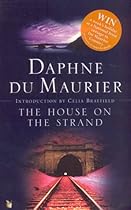
The House on the Strand (Virago Modern Classics)I thought I'd like Daphne du Maurier's The House on the Strand because it has so much going for it: strange concoctions that teleport people into the past.  Stepchildren. Recommendation by a friend. English.  But for me all that was shadowed by being trapped in the head of the narrator, a selfish, greedy, mean-spirited man.

He resents his wife's overbearing attitude.  Can you imagine, she'd like to know his plans for the future! She dares to want to know what continent they'll be living on, or whether he plans to get a job. Every month or so she nags him about this, because she is so annoying.  The kids keep expecting to, well, actually they don't expect much, and are happy and grateful for whatever comes their way, but still, having them around crowds his style.

The enjoyable part for me were the jaunts into the past,  but those are surrounded by the idiocy of the men doing the jumps.  See, only your mind goes into the past, so you wander about the present-day land, seeing what happened there hundreds of years ago, when people were much more interesting.  Of course, when modern things like trains zip through the land, unfortunate accidents occur.  It's not hard to think of a few safeguards to keep things safe, but that would require thought, which the protagonist avoids at all costs, preferring whinging and sulking as full-time occupations.  The call of the drug that brings on the past is clearly a metaphor for addiction, where the next fix becomes the only important thing, but I get enough of that from melodramatic YA books; seeing it in a supposedly worldly adult is dull.  I kept rooting for his wife to take the kids and leave.

I think my main problem with this book is that I approached it from the wrong genre.  In science fiction (time travel), the protagonist is usually someone worthwhile, or at least trying to be.  Also, intelligent. The reader is expected to root for them.  This book is literary fiction, where the protagonist is often encouraged to be vile.  I forgot that, so by the time I got my footing I had identified with the narrator too much, and couldn't distance myself from my contempt enough to enjoy the book.  Much the same thing happened to me when I saw the movie Fargo, which had been described to me as a light romantic comedy.  Or the movie The Sixth Sense, which I rented on a recommendation for a good date-night movie.  C-

Monday, May 9, 2011

Burning Down the House: The Ghost in the Little House

Laura Ingalls Wilder wrote the world-famous Little House books, chronicling the life of Laura from the Big Woods through the First Four Years.  They mix a charming, energetic girl's family life with fascinating details of pioneer crafts and ingenuity; I still vividly remember Laura's moccasins and pig-bladder toy as well as her wild struggles with a mean teacher in her adolescence.  But I hadn't known that Laura's daughter Rose was also an author until I read Borrowed Names, a poem about the relationship between Laura and Rose.

This led me to The Ghost in the Little House: A Life of Rose Wilder Lane (MISSOURI BIOGRAPHY SERIES) by William Holtz,  a biography devoted to Rose Wilder Lane, from her harsh life on the failed farm from the last Laura book through her journalist years, her novels, her extensive help to her mother's writing, and finally her status as an idol of the libertarian movement, a woman who refused to register for Social Security, who churned her own butter rather than register for rationing during World War II.  Although I enjoyed the frisson of finding that Rose rewrote all of the Laura books except the last, I found her trips abroad more interesting.  She spent time in Europe after the first World War, documenting the work of the Red Cross, and then went back to America to face the deprivations of the depression.  The text tends towards dryness, and I wish Holtz had forced more of a narrative; I often felt he was arguing towards a point but that he kept shifting directions.  I enjoyed this book, but won't search for other books of his.  B-

Tuesday, May 3, 2011

Housekeeper With Benefits: The Heir

My sister, who loves me (see Take a Chance challenge), recommended Heir by Grace Burrowes when I asked her for a book I hadn't read before.  To add icing to the cake, she lent me her Kindle to read it on, so I got to try out handheld electronic books as well as the recommended text.  I enjoyed both, but am not going to seek out my own.  Unless of course, said sister gives me an AWESOME birthday present, so that I have my own cosy personal NOOK, complete with library ebooks.

The Kindle was fun to read, and definitely lighter than a book.  I of course carried my bag of books around with me anyway, because what if I wanted to read something else, but when I got stuck icing my shoulder for twenty minutes after physical therapy, I enjoyed the Heir and the lightweight reader too much to want to swap out.  I think most people would find it easy to use from the start; as a klutz it took me a while to figure out how to escape the table of contents, and then later, to find the table of contents again.  The pages felt a bit small but didn't hinder my reading rhythm in the way that large print books do.

The book itself was a fun historical romance.  The characters were fairly modern in their outlook, but not baffled by their society.  In some historical romances, the heroine is SHOCKED to discover that women don't get to vote or win medical scholarships or use birth control (except often Our Heroine has learned this art from her crafty grannie), but in this one they seemed fairly grounded in their time but still comfortable hanging with the present day reader.  The initial set-up was fun (I always like when the main characters meet by accidentally attacking each other, although it helps if the less powerful person wins).  The love scenes were refreshingly believable, and my main complaint was the last quarter of the book, which was silly and unnecessary.  It was the worst kind of plot by misunderstanding, where both make unreasonable and incoherent assumptions and then refuse to mutter a word that would clear everything up.  The occasional appearances of the blackhearted and paper-thin villains actually pulled this part of the book up a bit, which is a sad thing.  My sister and I were very impressed by this first book by Burrowes, although when I went looking for her web page I see that actually it's the pen name for a fairly prolific author, so the first-book mistakes aren't so forgivable after all.  Anyway, very nice story that doesn't stick the landing.  B

Saturday, April 9, 2011

Saved By an Evil Cat: Happy Birthday Bad Kitty

I picked up Nick Bruel's Happy Birthday, Bad Kitty because I vaguely remember my sixth grader getting a Bad Kitty book for the second grader for Christmas.  And the book fair was at the second grader's school, so that justified the purchase of another book.  Then I forgot about it and it rode around in the car for a few weeks when it was time for an emergency dinner at McDonald's for me, the sixth grader and the second grader.

Now, those two boys have been clashing a bit lately.  In that the second grader falls about screaming if X breathes his air, watches his TV, speaks above a whisper, exists in comfort, whatever.  X usually bears this in patience for about thirty seconds, then starts screaming back.  So clearly the meal had few chances of success.  But I saw the book, grabbed it, plonked myself between the kids at our booth, and started reading aloud.

Both kids loved it.  The only screaming came when I went to fill my drink.  We almost finished by the time we had to move on to our next event, and it was then that I noticed that N had eaten about two bites of food -- he had been too busy cheering on Bad Kitty, commenting on the birthday guests, helping me read parts of the story, having a great time and not complaining about X's evil eyeballs battering his space or something.  Bruel and his Bad Kitty saved me from a bad evening with bad boys, so thanks!  A

Wednesday, April 6, 2011

Sparring Into Love: Spymaster's Lady

I swapped some romance suggestions with a friend (I suggested Jennifer Crusie), and picked up Joanne Bourne's The Spymaster's Lady on MM's recommendation.  The lady is a spy in her own right, one of the top agents of the French revolution, and holds her own deftly in the contests she has with or against the English spymaster.

I can really feel my age here though, because she is only nineteen and I kept thinking of her as a child (he's twenty six).  Shades of my mother telling me about the nice young boy she sat next to on the airplane trip, who suddenly turns out to be fifty something, not five.  But I was very uncomfortable during the first sex scene, because the issues of consent seemed very murky, especially with such a young girl.  But I got over it, and enjoyed the shift of balance between the two, as well as the often silly plot twists that Bourne skillfully kept me from giggling at.  I look forward to her next one, which I have conveniently already obtained from the library.

That's not my cover, by the way.  Mine has some guy taking off his shirt in a field, and I kept trying to figure out what scene it represents.  Not the bathtub scene, not the surgery scene, and it really doesn't work as the betrothal-in-a-park scene.  Maybe it's a teaser for a different book.  B+

Monday, February 14, 2011

Another Challenge: Take a Chance

This is a challenge that I have to actually attend to, unlike most of the other ones I sign up for.  I figure I'll try for a book a month, although with my history I'll probably spend December frantically racing through the categories.  Anyway, The Take a Chance Challenge is all about trying out new ways of finding books, with ten methods ranging from various book-picking web sites to random walks in the library.  Thanks, Jenners, for setting up this excuse to read more books!

I'm going to try #2 first; I think I have at least two family members reading this blog, so if one of them could please comment with a book suggestion, I can get started.  This is a TEST.

The ten categories are:
  1. Staff Member’s Choice: Go to a bookstore or library that has a “Staff Picks” section. Read one of the picks from that section.  Our library has a hot picks section out front, but I'm not sure if it is Staff Picks or just new books.  I'll look closer tomorrow.
    • The Snow Goose, Paul Gallico.  This ended up being a family book club selection.
  2. Loved One’s Choice: Ask a loved one to pick a book for you to read.  See above.  This will be my February book. Actually I ended up with three books, so I guess I'll overachieve.
  3. Blogger’s Choice: Find a “Best Books Read” post from a favorite blogger. Read a book from their list.  This would have been good to do in January, when everyone posted their lists.  I guess I'll do some archive diving
    • From Jenny's Books: Curse of the Wolf Girl.  I didn't love it as much as she did, but mainly because it hit hard against a few personal pet peeves.
  4. Critic's Choice: Find a “Best of the Year” list from a magazine, newspaper or professional critic. 
    • Room, by Emma Donoghue (Economist pick from 2010)
  5. Blurb Book: Find a book that has a blurb on it from another author. Read a book by the author that wrote the blurb.  Clearly this should be a book I love.  Hmm. Jack Campbell blurbs Elizabeth Moon.  Got it!  He has a new book coming out at the end of April.
  6. Book Seer Pick: Go to The Book Seer and follow the instructions there. Read a book from the list it generates for you.  This is a bit risky, since the book seer doesn't suggest much genre reading.  On the other hand, it will double up one of my 20/11 challenge picks.  I gamed it a bit by waiting till I finished a Jennifer Crusie book, but I came out with Simply Irresistible by Jill Shalvis.
  7. What Should I Read Next Pick : Go to What Should I Read Next and follow the instructions there. Read a book from the list it generates for you.  Never tried this before. I put in Jo Walton as an author I liked, and then picked Tooth and Claw as the book I particularly liked. The top recommendation was The Ghost in the Little House by William Holtz, which I'm actually planning to read anyway, so perfect.  And very odd.
  8. Which Book Pick: Go to Which Book and use the software to generate a list of books. Read a book from that list.  Who knew there were so many options for volition-less people to select their next book?
  9. LibraryThing Pick: Go to LibraryThing’s Zeitgeist page. Look at the lists for 25 Most Reviewed Books or Top Books and pick a book you’ve never read. Read the book.  Hmm, I glanced at the Top Books while making the link, and I've read them all, except the two I tried and DNF'ed.  
  10. Pick A Method: Pick a method for finding a book from the choices listed below (used in previous versions of the challenge): 1) Random Book Selection.  2) Public Spying.  3) Random Bestseller.  I'll probably do the library random book selection, since I tend to do that anyway.
    • Rosa's Bus: The Ride to Civil Rights, Jo. S. Kittinger