Showing posts with label kidlit. Show all posts

Friday, April 10, 2020

Ages and Bs

Beverly, Right HereBeatrice On Her OwnI just read two kidlit books with protagonists aged 14 and 13. Kate DiCamillo's Beverly, Right Here and Rosemary Zibart's Beatrice On Her Own.

Both were gifts from LibraryThing EarlyReaders, and both got buried under the onslaught of Cybils reading I did last fall as a judge for the Junior & Senior High nonfiction categories. Oops! But now I'm back, and there is lots of time for reading, and I am uncovering my review copies.

If I could see my 4th/5th grade reading club again, I'd offer them these books at our end of the year part, but I'd try to push them towards the 5th graders. The reading level of the DiCamillo seemed smaller, but the emotional complexities loomed larger. On the other hand, the Zifard assumes a basic knowledge of history -- what was World War II, who was involved, and vaguely when did it take place. I think my kids have that, although they have a distressing tendency to group all historical events loosely together. Distressing because they include my childhood in that "historical event" category. So, the 1970s were a bit after World War II which was a bit after the American Civil War.

Both books star a teenage girl (Beatrice is 13, Beverly 14) who is independent. Beatrice is proud of her independence because it is newly learned; she arrived in America last year and struggled to learn to stand on her own. Even now she considers herself a child who requires adult supervision even as she has more and more adventures on her own. The adults around her honor and encourage this evan as they support her. Beverly has a broken family, including a mother who is abusive and distant. She doesn't even think about her independence; it's been a part of her since she was a small child learning that she couldn't rely on the adults around her. Her journey is the opposite; she needs to learn that there are adults who can be trusted, who will care about her. Starting from a place of deep grief -- her dog, the only one she trusted to care about her unconditionally, has just died -- she struggles with the idea of reaching out for connections to anybody.

The tone is the biggest difference. Beatrice is very pragmatic -- the details are real, the situations seem possible, the dangers and risks (from emotional fear of confessing a crush to physical danger of waiting with an injured dog during a snowstorm to the suspense of chasing a spy) tangible. I'd give this to any kid interested in history and quiet adventures. Beverly is more dreamlike; Beverly is stumbling through a cloud of grief, and unlikely coincidences move her into a place of healing. As a guide to running away, it's terrible! But I don't think kids would take it that way; it's more an acting out of emotions than a real predicament. I would give this to kids who want to explore deep emotions, who don't mind crying over books, and who don't insist on strict realism in their stories.

Thank you to LibraryThing's EarlyReaders program for sending me these books, and I apologize for my delay in reviewing them!


Saturday, September 13, 2014

Cybils Fiction Picture Books

Cybils2013SmallI have forced all my kids and some relatives into reading the Cybils picture books. Our committee:

Me: Parent, book lover.
X: 15 year old boy, book lover
P: 12 year old boy, book liker. Willing to read picture books with me fairly often. Enjoys reading to his 2 year old sister when she behaves herself.
N: 11 year old boy, emerging reader. Book acceptor.


Sophie's SquashOpen This Little BookMr. Tiger Goes Wild

  • Sophie's SquashPat Miller. I loved this one -- it's my favorite. P & N liked it. X panned it as weird, which amuses me since he carried around a bruised pumpkin as a buddy for several days in his misspent youth.
  • Open This Little Book, Jessie Klausmeier. Fun for me, P, & N. X thought it squandered a great premise on a flimsy story.
  • Mr Tiger Goes Wild, Peter Brown. N's shocked look when the NUDITY happened was priceless. X's third favorite. Appreciated by me & P.
JourneyIf You Want to See A WhaleCount the Monkeys
  • Journey, Aaron Becker. X's clear winner -- "a thinking man's Harold the Purple Crayon". N, P, and I also liked it. This is the one I urge friends to buy -- it's a clear parent's favorite that kids will like.
  • If You Want To See a Whale, Julie Fogliano. X found it dull. P & I liked it, as did N.
  • Count the MonkeysMac Barnett.  N's declared victor ("they are all good, but this is best"). X's second choice, and his first pick as a read-aloud. P also approved of the concept and art.

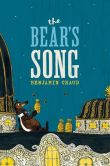
The Bear's Song

  • The Bear's Song, Benjamin Chaud. Our library eventually processed this one. Everyone liked it, although the illustrations were not as expansive as our favorites. We liked the Where's Waldo aspect but were frustrated a bit at the cub's nondistinctiveness.
And the winner was: Mr Tiger Goes Wild. Well, it was no one's favorite, but everyone liked it. I shall enjoy telling N that the book he considered borderline pornography was the judge's choice.


Tuesday, July 22, 2014

Library Questing

.
So, for the past few years I've been slowly reading a book from every shelf of the library. I check out a pile, then return in a few months and check out the next pile. But now things need to speed up a bit -- We have our official notice that the library is getting renovated this summer, so I'm trying to hurry up and finish the Juvenile books before everything is completely reshuffled. Then I just have to figure out what are the new sections of the library and continue my Every Shelf Quest.

Anyway, I hit the Fairy Tale shelves:

E398.20941 A Home In the Sky, Olivia Snowe. This retelling of Jack and the Beanstock drags the story into the modern day, which leaves a lot of moral ambiguity. Jack's mother is poor and rather abusive, demanding that Jack sell his bike and exchange his paper route for an elusive better job, and she swerves from blindly accepting the bag of gold he brings home to foolishly insisting they turn themselves into the tyrant Jack has been stealing from.  It's a sprightly tale but doesn't hang together in afterthought.

E398.20942 English Fairy Tales & More English Fairy Tales, by Joseph Jacobs, ed. by Donald Haase. Back when the Grimms were big news, other countries also searched out their home tales. These books were written for kids but had scholarly notes at the back detailing where the stories were found, what changes were made, and parallels between other stories here and in other lands. Interesting. I tried reading a few of them to my captive audience and he enjoyed it.

E398.20956 The Wise Fool: Fables From the Islamic World, Shahruhk Husain. A delightful book about a trickster iman who sometimes triumphs and sometimes fails. The illustrations match the mood of the stories perfectly.

E398.8 Other Goose, J.otto Siebold Reminiscent of The Stinky Cheese Man, this has twisted version of nursery rhymes along with bold, almost deviant art. Preschoolers should love it.

The Holiday Shelves:

CHRISTMAS: A Child Is Born: From the Gospel According to St. Luke. Unlike the other Christmas stories, this one is about religious Christmas, not the secular, Santa one. Warm, gentle pictures accompany the text, even occasionally obscuring it a little when the dark print appears in the dark blue sky. Each page has only a few sentences, making this appropriate for smaller children, but the pages are interesting enough to linger over.

CHRISTMAS  Christmas Wombat, Jackie French. Clean white pages show tubby wombat and his quest for carrots as he smuggles himself aboard Santa's sleigh and eats delicacies (carrots) all over on Christmas Eve. Cute.

CHRISTMAS Dinosaur vs. Santa, Bob Shea. Vibrant colors and huge depictions of little dinosaur propel this preschool aimed story along with energy and vim. I would have enjoyed reading this to my sons when they were young (I just handed it to an old one).

EASTER: Piggy Bunny, Rachel Vail. A wonderful story about a piglet who dreams of becoming the Easter Bunny. His family assure him that he's a wonderful piglet who doesn't need to change, but his grandma enables his fantasy. With a little help from the internet in my favorite page spread -- Liam: "You know how to make an Easter Bunny suit?" Grandma: "Absolutely not. We will order one on the internet." I want to grow up to be that Grandma.

HALLOWEEN: Halloween Good Night, Doug Cushman. A cozy little book with a repetitive rhythm following a variety of traditional Halloween monsters getting tucked into bed, from a werewolf through ghosts to an alien, with a nice concluding page summarizing all the good night phrases and adding in a bunch of different languages, helpfully translated on the final page.

JEWISH HOLIDAYS: Talia and the Rude Vegetables, Linda Elovitz Marshall. Preparing for Rosh Hashanah, Talia goes out to pick vegetables. Thinking her grandmother asked particularly for "rude" vegetables, she has to figure out how to tell which potatoes, parsnips, etc are rude vs polite, and then gives the extra to the needy. The pictures and text are fun but classy, and the recipe at the end would be fun to make as a family.

The Easy NonFiction Shelves:

E020.23 Let's Meet a Librarian, Gina Bellisario. Of course I picked this one from the shelf of community workers! It's a fun look at the different roles of librarians, especially school librarians, who track books, share information, and fix computers. Sometimes they even read stories! Yes, this book strengthens my belief that librarians are cool.

E323.119607 Rosa's Bus: The Ride to Civil Rights, Jo. S. Kittinger. I have to disagree with the first page of this book -- I don't think bus #2857 is actually famous. I think "famous" implies that people know the name, and I certainly don't know that number. But the story is a good hook for the history of the bus boycott inspired by Rosa Parks.

E428.1 Thumbtacks, Earwax, Lipstick, Dipstick: What Is a Compound Word, Brian P. Cleary. Fun pictures and amusing words fill the pages of this amusing book, but I'm not sure who the audience is. Do kids really pick up grammar books on their own? I think this would work as a picture book, though.

E495.182421 My First Book of Chinese Words: An ABC Rhyming Book, Faye-Lynn Wu. The introduction for parents gives a sense of the purpose of the book and helps with pronunciation, and the pictures and chosen words look like they'd work well with preschoolers. However, the English verses are stilted. I think the rhymes were a mistake. I liked how the book gives both the Chinese characters and the pronunciation of the chosen words.

E513.211 Mice Mischief: Math Facts in Action, Caroline Stills. I have no idea how someone decides what's a picture book versus a Easy Reader nonfiction.  This book actually shows the equations (9+1=10, 8+2=10...) so maybe that sends this book of cute mice cleaning their house over to the serious stuff section?

E536.50287 Measuring Mania: Measuring Temperature, Darice Bailer. Cute, crisp pages explain the science behind temperature. Meanwhile, I'm distracted by the photo of a soup above text discussing getting fudge to the right temperature, a craft to create a fake thermometer (why?), and advice to get adult help to turn on the oven -- my new pet peeve is learned helplessness for children.

E567.918 Pterosaur Trouble, Daniel Loxton.  This cute story of a pterosaur's brush with danger dances very close to the fiction/nonfiction line. It obviously never happened, and it takes a lot of guesses to say it could have happened. Not sure I would have put it on this side of the line.

E591.43 Over and Under the Snow, Kate Messner. Another picture book that could just as easily be shelved outside the nonfiction area. The crisp, white-filled pictures do illustrate a beautiful scene, but the facts appear almost secondary.

E595.789 Grow With Me: Butterfly, Kate Riggs. A denser description of the butterfly life cycle, form, and habits, with highlighted vocabulary and large photos with eye-catching inserts. I do think that elaborate Dewey numbers are worthless for most school and public libraries -- 595 is the insect shelf, and the longer numbers just teach kids that Dewey numbers don't mean much, which is horribly untrue.

E599.67 Queenie: One Elephants Story,  Corienne Fenton. In 1896 or so, a baby elephant, was born, and by 1905 she was old enough to start giving rides to children at the Melbourne zoo. In 1944 she squashed a keeper and banned from giving passenger rides, and since she was no longer a cash cow for the zoo, she was put to sleep. Thus the history of the zoo movement and elephants is distilled into a tragic picture book.

E618.9297 I Think I Am Going to Sneeze: A First Look at Allergies, Pat Thomas. This transparent mission book wants to reassure children that their allergies won't kill them or doom them to a life of social leprosy before they are old enough to understand what loneliness is. If it also transmits some information, BONUS. Still, didactic is not a flaw in the nonfiction section. I will try it on my allergy-lad.

E625.1 Trains, Amy Shields. I had a child who lived and breathed trains, so this shelf is very familiar to me. It's hard to go wrong with pictures of trains, and any text you throw down works. This one was not memorable, so not great but not terrible. I did find the engineer annoying -- I suspect my kid would have wanted him to step out of the way so he could see the trains better.

E636.7376 My Favorite Dogs: German Shepherd, Jinny Johnson. This book is an obvious excuse for lots of cute dog pictures, along with some text giving the history and best features of the breed. It's clearly a nonfiction, and can I use this entry to complain again about huge Dewey numbers on skinny kids books? It's foolish.

E690 Look at That Building: A First Book of Structures, Scot Ritchie. This book felt like a nonfiction tome -- although it had a window dressing of named characters to lead us to the information, each page clearly laid out the message to be delivered and the concepts and vocabulary conveyed. It would have been a fun read and lead to kids playing around with stud finders.

E791.64 Cheer Skills, Jen Jones. I read this after watching the Buffy episode where she tries out for the cheerleading squad, so I had something to compare the skills with. It gives a decent overview of some of the main skills (jumps, hand motions, ripples) and then reminds everyone to SMILE. I'm still not sure that it's a sport, though.

E796.91 Ice Skating, Bob Temple. A similar style book that covers the different kinds of skates and ice sports, with slightly dated pictures of smiling people skating. It seemed odd to me that so many of them were skating outside, but that's because I always try to live in sane places where the weather doesn't allow that sort of thing.

E821.7 Twinkle, Twinkle, Little Star, Jerry Pinkney. Pinkney lavishly illustrates the famous poem (including some less famous verses) with pictures showing a complete story of a questing squirrel. The painting and details are fascinating; I would have enjoyed reading this with my kids. I'm not sure why it's a poetry book rather than a picture book though.

E979.132 Big Outdoors: GRAND CANYON, Valerie Bodden. Big pictures on one side, text with a inset picture on the other, and the Grand Canyon as the subject means this book is fun to page through. The informative text doesn't grate, but of course the pictures of the view dominate. More fun than I expected, and definitely nonfiction.

EB All Star: Honus Wagner and the Most Famous Baseball Card Ever, Jane Yolen. Fun story of one of the first Baseball Hall of Fame honorees. Wagner played baseball in the early 1900s after a hardworking childhood in a Pittsburgh suburb. He canceled his card when he realized they were sold inside packs of cigarettes, which he considered a bad marketing ploy for children. The title was a bit misleading since the card was only mentioned on one page and the target audience may not have a complete understanding of the economics of memorabilia and scarcity.

And the Easy Readers:

Baker, Keith. Fishing: A Mr. and Mrs. Green Adventure. Keith Baker is one of my favorite picture book artists, and I remember reading some of these books with my kids. It's a Level 2 (easy) read but with tons of humor and characterization pack in. The characters are as unselfish as Gossie, but in a believable way.

Dunrea, Olivier. Gossie. Level 1 (super easy) reader about an improbably gosling. I didn't find the boot-wearing improbable, but the conclusion to the story -- Gossie's beloved boots are stolen, and her reaction is to split them with the thief. I don't want friends like that.

Marshall, James. George and Martha, Full of Surprises. This older early reader lures new literates with the welcoming hippo art of the main characters. It's easy to like to read when you see the illustrations of two friends squeezed into a Ferris wheel seat.  The surprise plot is an acceptable mate to the pictures.

McPhail, David. A Bug, a Bear, and a Boy. Although the text is simple and sparse enough to justify the Level 1 rating, it's also fresh and entertaining. I read it with my emergent reader, and he approved of everything except the green bath water, which I have to admit is rather repulsive. The author's name sounds familiar -- is this the guy who wrote the prize winning Amos book?

Rylant, Cynthia & Howard, Arthur. Mr Putter & Tabby Dance the Dance. My second son jumped into independent reading with this series, so it has a special place in my heart. And I hope he'll still read this latest selection even though I doubt his eighth grade teachers would accept it in his reading log.

Rylant, Cynthia. Poppleton and Friends. Wow, I guess Rylant rates two shelves worth of easy books. This book was also fun, although the relationships between the characters aren't that firmly established. The giggles at the idea of a pig wearing the same shirt three days in a row were a joy to hear.

Willems, Mo. I'm a Frog! Somehow I skipped last year's entry in the Elephant & Piggie series, which was a shame because this one is a lot of fun. It has some biggish words (pretending) but also has the fun of Gerald's panic and bewilderment as Piggie explains the imagination to him.

Sunday, March 9, 2014

Cybils 2013 Easy Reader Finalists

I gathered the collection of Cybils Easy Readers and read them all. Then I tried to read them with the not-quite-independent reader. This is exciting because he's right about the level that these books are aimed at, so I feel it's a fair test.

Then I got my high schooler to read them. There are many reasons I love my son, and the fact that as a high schooler he's still willing to read and enjoy books like these is only one of them. But it's a wonderful reason, isn't it?

Finally I watched the junior high boy read them, so I completed my family of testers.

A Big Guy Took My Ball! (An Elephant and Piggie Book), Mo Willems.  I loved share reading this with the elementary student. He's very familiar with Elephant and Piggy books (I think one was his first official READ BOOK), so he claimed Gerald and had me read Piggy, and listening to his expression and dynamic changes was refreshing. We both read the parts of the Big Guy, using Dory's whale accent from Finding Nemo. As always, Willems delivers a fun story with great characters using minimal text.

So this one was a hit with everyone, adult, high school, junior high, and elementary student.

Joe and Sparky Go to School, Jamie Michalak. When I share-read with a new reader, we often alternate pages. This works really well for Michalak's fun story about a field trip to a school by a giraffe and a turtle, and my emergent reader is also currently very game for pauses to speculate what will happen next or what the effect of what just happened. Particularly relevant was the scene where poor Joe gets lectured for interrupting when he tries to hush Sparky in order to hear the teacher, and then the teachers rubs salt in his wounds by awarding Sparky a star for good listening.

We've all been through the agony of injustice, haven't we? Then the chapter about the "restroom" literally had the boy rolling around laughing. The words "magic pond" will never be the same. This was his and my top pick of the set, and enjoyed by everyone.

Love Is in the Air (HC) (Penguin Young Readers, L2), Jonathan Fenske
This was a sweet small story, almost as easy to read as the Willems book but with enough plot and emotion to justify itself. I also liked the action in the pages, both the constant up and down and the vividly depicted twists and spins.
The high schooler actually found it creepy -- he read the final scene as a Romeo & Juliet style suicide pact. Interesting connection there. The junior high boy also appreciated that ending; he's been a bit depressed lately so any book that ends with "and then they all died" is pronounced a Happy Ending.
Penny and Her Marble (I Can Read Book 1), Kevin Henkes. I enjoy almost everything Henkes has written, from picture books through early readers into middle grade books. I do admit that my older boys find them dull now -- they are not charmed by the cosy family life or Penny's very realistic moral crisis.

So, I liked it, but all three boys regarded this as a snoozer.

The Meanest Birthday Girl, Josh Schneider. I actually read this one months ago, pulling it off the library "New Books" wall for its cover. But in fairness I reread it with the others and then offered it around.

The high schooler awarded it the prize, and loudly guffawed as he read it. He proclaimed it one of the the best books he's read all year (OK, it's February) and called it a "Monkey's Paw for little kids." High praise indeed. The junior high boy and the elementary kid both praised it as well.

Urgency Emergency! Big Bad Wolf, Dosh Archer. I liked how the lost child in the first pages tied back to the devoured grandmother inside the wolf.  The pictures were good and the story solid, although I have more sympathy for the wolf than the text supports.

This got high marks from the youngest reader, but the older two were just mildly amused. The Cybils judges gave it the prize, but after all, they could keep the real audience in mind while my test readers really stretch that border. Well done Cybils authors -- it's not every author of an Easy Reader who can also keep the attention of teenagers!


Tuesday, March 4, 2014

Cybils NonFiction Picture Books

I gathered from the library the collection of Cybils Nonfiction Picture Books (Nonfiction: Elementary & Middle Grade) and read them all. Then I tried to read them to the not-quite-independent reader. Then I got my high schooler to read them. Then I enticed the junior high boy with them, with less success. And then I posted this!

The Boy Who Loved Math: The Improbable Life of Paul Erdos, Deborah Heiligman. A biography of Erdos that takes its readers seriously enough to have the numbers in the illustrations match real categories -- different kinds of primes, series, and formulas. The pictures and texts are good for reading aloud, and the extras scattered throughout and detailed at the end provide more the kid who also loves math. Also, I have an Erdos number of 5.

This was the favorite of both the high school boy and his younger brother, and my second favorite.

Volcano Rising, Elizabeth Rusch. A fun read-aloud, with good shared reading potential. It was easy for the emerging reader to handle the large text and then let me round out the information with the smaller text boxes. The pictures are bright, enticing, and informative. I have now added a'a to my general vocabulary and am just waiting for my next scrabble game.

This received top votes from me and the youngest reader.

How Big Were Dinosaurs?, Lita Judge. A cute read with colorful dinosaurs, but not really firm on the science. Everyone read it but no one had very strong feelings -- I wish I had a slightly younger volunteer to test its real audience.

Look Up!: Birdwatching In Your Own Backyard, Annette LeBlanc Cate. A chatty, enthusiastic book burbling with information and hints about watching and drawing birds wherever you go. A bit too text-tense to read aloud, but easy to read to oneself.

I enjoyed this one a lot, but my high schooler and the new reader found it dull. I suspect they recoiled whenever the author hinted that drawing was an option -- artistic talent, well, basic competence, is thin on the ground around here. The Cybils team sure liked it though! (It won.)


Locomotive, Brian Floca. My eldest son would have adored this train book back in his train-mania days. The over sized pictures give a real sense of the power and majesty of the old steam-engines, as well as the scope of the country they travelled back in their prime. The people in the illustrations seem pleasant but much dimmer than the arresting views of the engine, wheels, and scenery.

Barbed Wire Baseball, Marissa Moss. This is a new story that covers the internment of Japanese citizens that focuses on their strength and determination rather than showing them as passive victims. The biography of a Japanese-American baseball player who builds a baseball field in the internment camp shows both how American the internees were but also how they maintained their family and cultural loyalty. Also, it's a great story.

It was the second choice of the high schooler, who agreed with the great story diagnosis. The new reader found it a bit intimidating; he felt he should be able to read it but the text was just too dense. I'd definitely want my library to have this one.

Anubis Speaks! A guide to the Afterlife by the Egyptian God of the Dead, Vicky Alvear Shecter. This book seems qualitatively different from the others -- I would have put it in with the older nonfiction books. It didn't get a fair review from my team of kids -- they all thought it was in the wrong pile. I'll try to get the older ones to read it right before I start bringing in the older nonfiction finalists and see what they think.

For myself, I was interested in in the information -- it's a great companion to Rick Riordan's Egypt series. But I found myself a bit squeamish about the juvenile depiction of a religious figure -- it was clear that many people had sincerely believed in Anubis, so his more snarky comments and low humor moments rang false for me.

Wednesday, January 29, 2014

Reading My Library -- Approaching the End of Part III

Image of RentonAnother step in my Reading My Library Quest is almost complete! I've finished Picture Books, Series Books, and have the last few shelves of J Fiction waiting to read. After I finish W-Z I'll be on to J NF, which is mostly picture books. That will be fast! And just before I finish those, they will close the library for renovation and I'll have to start all over again. I'm looking forward it it.

Listen!, Stephanie Tolan. Dog books attract tragedy like fleas, but at least in this one all the sad stuff happens before the book opens -- the mom dies, the dog is abused. I liked the slow growth of trust between the girl and her pet, and how caring for the dog obviously helps Charley deal with her grief but this isn't belabored heavily. The insights into her mother's photography were powerful, as there was a real reason for sudden images to really mean something to Charley. The weakest part was the psychic link or whatever that gave Charley the ability to sense where the dog was; in a work that had built up their relationship with solid realism that magic just drained the suspense and power from the page. Lucky it was only a small part of the story.

BreadcrumbsThe Shadow Thieves, Anne Ursu. Wow. This one was a lot of fun. It looks like a lightweight children's fantasy adventure, and it's a good one, but the characterization is spot-on, the humor is masterful, and the prose is delicious. The cover is dull, but I think that's been addressed in later editions. I've just put all of Ursu's backlist on my TBR list, and I really wish this wasn't due on Thursday because I bet my kid would love it. I think I'll give it to him anyway; he can easily finish it in a day.

Navigating Early, Clare Vanderpool. Two grieving boys in Maine go on a river journey to learn about themselves with the aid of amazing coincidences. I liked the independence of the boys, and how hard the narrator had to work to become loyal. I was suspicious of the "boy on the spectrum" thing, but Vanderpool does a good job portraying a kid who is a bit different than his peers expect. 

photo-paperboy-coverThe Paperboy, Vince Vawter. Vawter does an excellent job showing how it feels to stutter and how it affects communication and self-esteem in non-obvious ways -- the boy nicknames his friends based on words he finds easier to say and plans out his conversations to avoid known land mines (I liked how he skipped collecting payments at one house because it moved the amount from a series of impossible syllables to a more manageable phrase). Simultaneously Vawter presents a view of segregation era Memphis, where black and white roles are rigidly set but nannies can sometimes move between the groups (a nanny with her white charge might be sitting anywhere on a bus).
Coyote AutumnCoyote Autumn, Bill Wallace. Set in Oklahoma, which jumped it up the queue. This turned out to be a coyote book rather than a dog book, although it had dogs too. (I thought it would be about a dog called Coyote.) I liked the family dynamics, which started out as cardboard antagonists but then developed more depth and emotional clarity.

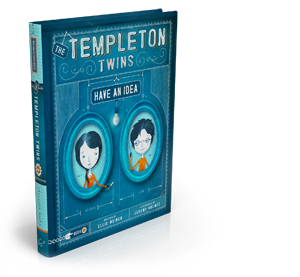
The Templeton Twins Have an Idea, Ellis Weiner. I chose this because I knew my younger son enjoyed it. I see why. Actually, I had thought he had refused to read it but apparently he just reads faster than I realized, and when he saw me reading it he laughed again. I appreciate the summary questions at the end of each chapter, and I'm getting the sequel for my son. Too bad I can't read it until April. (See Triple Dog Dare)


Tuesday, January 28, 2014

Kidlit Tuesday Picture Books

While browsing at the library and moaning at the self-imposed restrictions of the TBR Triple Dog Dare (no new books! The horror) I pulled down some of the pictures books from the library display shelves. This are sometimes new and sometimes just staff favorites.

Boy, Bird, and DogFossilFossil, Bill Thomson. The pictures are vibrant and alive, just as in his earlier book Chalk, but my science soul was scandalized by the destruction of the fossils. Yes, I know he had to save the dog, but still!

Boy, Bird, and Dog, David McPhail.  I was disappointed that this was an easy-reader instead of a picture book, since the simplistic vocabulary pulled me out of the story and art. The pictures were much gentler (and frankly, almost dull) compared to what I expected from the author of Edward and the Pirates.

Vote for Me!, Ben Clanton. The adult snickering behind the childish elephant and donkey candidates somehow didn't tickle my funny bone, and the story didn't really stand up without the secret humor. Also, it left me wondering about the metaphor when the mouse stole the election; the ending felt like a bit of a cop-out.

It's Duffy Time!Boy + BotBoy + Bot, Anne Dyckman. This would be fun to read with a preschooler, as the boy tries to heal the turn-off robot and then the robot tries to repair the sleeping boy. The pictures are fresh but uncomplicated and the story funny without being pointed.

Sammy in the SkyIt's Duffy Time, Audrey Wood. Few works of literature remind us of the importance of the Before Breakfast Nap, although the After Breakfast Nap is more known. Duffy stresses the importance of both. A very relaxing book, recommended especially to nap lovers. Also kids might like it.

Sammy In the Sky, Barbara Walsh. I was prepared to resent this book, since I have a strong resistance to obvious bibliotherapy texts. But the intimate pictures of the girl with her dog and family won me over -- it's a story about how a child deals with loss, not an instruction manual on handling emotions raised by a pet's death. I was also impressed that the dog died at home, in this age of vet-handled mercy euthanasia. I guess I should have noticed it was written by a Pulitzer-prize journalist and illustrated by Jamie Wyeth and had more faith.
Happy

Happy, Mies van Hout. The picture promised beautiful and odd art, but the delivery left me wonder who the audience was for this emotional dictionary. The one word / one picture format implies tiny children, but they would be confused by the fish expressions, which are sometimes hilariously obvious but sometimes rather obscure. The delicate, sometimes grotesque paint lines extend even to the font of the words, making it sometimes harder to read the emotion than to recognize it on the picture. This would also detract from the fun of a read aloud. I think my kids would appreciate it now more than a decade ago, but they had already fled the library so I couldn't try it on them.


Sunday, January 26, 2014

Book Sorting -- The Lines Between Kidlit and YA and Adult

I like to read books about kids. That's probably because I like kids, and also because I find some adult issues boring even though they are the main interest of many authors -- adultery, male identity crisis, where to find gorgeous shoes -- these are all things that modern books love to explore but leave me bored out of my gourd. That's probably why I also like genre books -- science fiction, romance, mystery, all these "genres" tend to have something interesting going on, even if they occasionally also throw in worries about who to sleep with, why does no one respect my (male) authority, and shopping.

Sometimes I separate my personal library by kidlit/adult books. (Every five or ten years I like to do a huge overhaul of my books. Doesn't everyone? Don't answer that if you don't at least alphabetize.) And if the protagonist spends most of the time as a child, I sort the book into kidlit because I would have liked it as a child and the author doesn't get a vote. (The Power of One, I'm looking at you.) And I get to decide where YA goes because they are my books. But I'm glad I'm not a public library, because then things get a bit stickier.
Alabama Moon and Awards
I finished Alabama Moon by Watt Key this month, and I'd like to thank past me for putting it on my TBR list; I think it's my favorite book by Key so far. It's the story of the transition into society of the boy Moon, who has been literally raised in the wilderness by his survivalist father. It throws in some crowd-pleasers like the stupid & evil cop (sort of a malicious Roscoe P.) but mainly follows Moon as he struggles to fit in a completely alien society with unknown rules and connections.  Moon is eleven or twelve, and the themes are about connecting to family and trusting in friends, so I'd have no hesitation putting this on my kidlit shelves, but the library has it in YA. Is that because of the guns? The ideas of fearing the government? I have no idea.  I think the publisher is a bit confused as well -- the reading level is ages 9-12 or grades 6-8. Those don't match up, but the complete range (age 9-14) seems right.

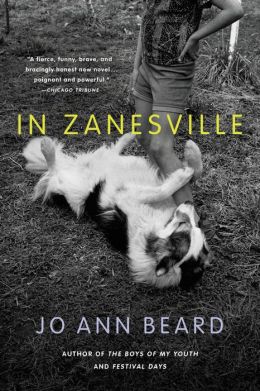
In Zanesville: A NovelI also completed In Zanesville by Jo Ann Beard and while that managed to miss the spot for me I think that was more my problem than the author's. It recreates the adolescent world of a girl in the late seventies/early eighties with fine precision, but it's a world that was alien to me at the time and so I didn't enjoy revisiting it. I wasn't into boys and clothes as a teen, and I found the girls who were dull and sometimes antagonistic, so spending pages in the head of one of them was uncomfortable. It's also a book that seems written to remind people of their youth rather than to resonate with someone living their youth, which is why I guess the library puts it in adult fiction rather than YA despite the teen-age protagonist. On my shelves it would have gone straight in with the kid books, since I would have approached it with a science-fiction style of entering into an alternate reality, but when I was a kid I wouldn't yet have the memory baggage that made it an uncomfortable journey.


Tuesday, January 14, 2014

Kidlit Tuesday: Pictures Books and Book Club

I brought cookies to my local elementary school for book club yesterday, and we had a fun half hour talking about Eva Ibbotson's Dial-A-Ghost. It was hugely popular, and I tried to talk the girls (we were all girls this month) into checking out some of her other books as well. I'm a big fan of Ibbotson's kidlit, YA, and adult books, so I always like hooking new readers. The book was so well liked it was almost hard to get a discussion going, since we all agreed about everything -- it was funny, the scary ghosts were nasty but not disturbing (although we decided that you should be careful if you read it aloud to a first grader or younger), and we all liked the balance of danger and resolution. I stuck in the idea of the definition of a main character -- who was the book about? And I also talked a little about plot structure, especially books with many little pieces that all come back at the end.

Sadly, that was the only kidlit I read last week.

While browsing at the library last Thursday and moaning at the self-imposed restrictions of the TBR Triple Dog Dare (no new books! The horror) I pulled down some of the pictures books from the library display shelves. This are sometimes new and sometimes just staff favorites.

Paul Meets Bernadette
Paul Meets Bernadette,  Rosy Lamb. A fish-eyed optimist populates the world for her gullible friend. My kids would have been utterly appalled at their confident errors, and I was left wondering if Paul was better off being delusionally happy with Bernadette or sane but lonely. If I see it next time I'm in there I will get the boys to read it. The pictures capture the world view and possibilities of the fish-eyed world delightfully.

9781609053093
What Is Part This, Part That?, Harriet Ziefert. This would be a great read-aloud with young children -- I can imagine my kids enjoying the riddle-like structure, especially with the participation of lifting flaps. I guess it's aimed at the talkative toddler/early preschooler.

Hide and Snake
Hide and Snake, Keith Baker. Actually, this looked very familiar. I bet I did read this with my kids during their tiny days. I'm a huge fan of Keith Baker -- his Who Is the Beast is one of my go-to baby gifts for new parents or family birthday parties. This book skipped the profound philosophical statement but kept beauty and simplicity that rewards careful observation and return visits.

Tuesday, May 28, 2013

Kidlit Tuesday: Kids On Their Own

Since I'm about three months late, I'm trying to group some of the kidlit I've read into loose groups. This weeks batch is books about children, almost exclusively girls, left without parental support for some reason. For some reason I haven't read books lately where the boys are orphaned. Maybe I just read more books about girls? After all, we are more interesting, right?

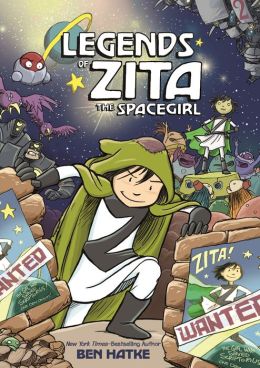
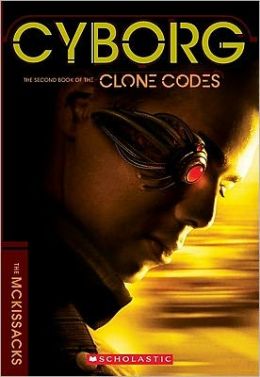
Legends of Zita the SpacegirlCyborg (The Clone Codes Series #2)In some of these, the plot is an adventure and the parents are gone mostly so the kid can act heroically. Although there is some worry about the lost ones, clearly they need to be out of the way. Zita doesn't seem to trouble about her worried folks back on the home dimension, and Leanne, friend of the Cyborg,  doesn't have a personality as much as a plot purpose, so her worries about her arrested mom come and go depending on what the plot would prefer. My kids never worry about the missing parents in these books either, which concerns me a bit. I ask them if they'd notice if I were gone, and they say probably, although if magic or robots start appearing they might be too busy. Fair enough.


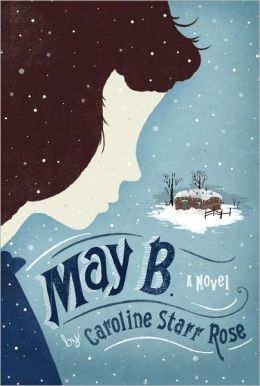
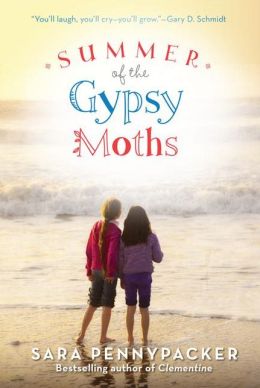
May B.Summer of the Gypsy MothsIn increasingly emotionally complex books, the parents are removed in a more realistic way. In Summer of the Gypsy Moths, two twelve year old girls desperately want to avoid foster care and so they conceal the death of their elderly guardian and survive alone in a house for a summer. May B.'s parents and employers manage to abandon her in a lonely sod house on the Kansas prairie with no way to get out or call for help. These last two are a good contrast, as May is capable of all the tasks she needs for survival, but is unwillingly alone and desperately lonely, while the lesser skilled Gypsy Moth girls not only have each other for support but could end their isolation at any time by admitting the truth. So while May cooks and manages and desperately tries to contact anyone, the Gypsy girls constantly fend off well-meaning adults to keep their isolation going while scrambling to feed themselves.


Cyborg: Clone Wars 2, Patricia, Frederick, & John McKissack. The writing is uneven enough to make me wish the author above had been pushier with her coauthors -- the characters' motivations and actions were often inexplicable (why didn't Houston tell anyone their ally was lying? Why did Leanne suddenly decide to give herself up without discussing it with her friends? Why did Toby suddenly show up a few pages before his help was essential?) It's like they think story doesn't matter if you are doing SF, especially SF with a message.

Legends of Zita the Spacegirl, Ben Hatke.  My kids and I reallly like these graphic novels, with their attractive art and fast moving story lines. I found it interesting that Zita makes some big mistakes (stealing a spaceship) although my kids agree with her that it was just necessary. I also worry about her parents back home, which doesn't trouble the boys at all. We'll keep looking for more Zita.

The Summer of the Gypsy Moths, Sara Pennypacker. Classic story in the tradition of My Side of the Mountain, the Tillerman cycle, and other independent child tales, with two young girls fending for themselves after their foster parent dies. As an adult, I found the dead body creepier than my younger self would've, but the authentic voices of the girls and their often hilarious attempts to cover up their solitude more than made up for it. Very different from the Clementine books, but still good.

May B., Caroline Starr Rose. RML. Ooo, I strongly dislike poem novels. So I got mad when she did something silly even though she was only a kid. I liked that she went off on her own, even though only a coincidence saved her life.