Showing posts with label SF. Show all posts

Sunday, April 6, 2014

Fun On a Rainy Day

steampunk romance coverToday has been stressful in a lot of ways, so I was glad to have the chance to relax into Lindsay Buroker's new book, Balanced on a Blade's Edge. I'm still working my way through Buroker's backlist after my book club read The Emperor's Edge last year as part of our ebook experiment (hey, go try it, that one's free). She writes fun steampunk books with romance in the background -- they aren't really romances although that's clearly an important part of the characters' lives.

This new book was a bit of an experiment; Buroker apparently had a fun idea when she was surprised by a few weeks of free time, so she converted her ideas into a book at full speed. So this one is fairly short -- about 200 pages, and also fairly direct -- we have the two strands of the main character and don't bother to dive into long flashbacks or twists along the way. But it also has Buroker's strengths -- fun dialogue, both internal and external, interesting, slightly flawed characters that I enjoy cheering on, and a vibrant setting that never overwhelms the story. Oh, and characters with a good bit of common sense, a characteristic that I may add as one of my favorite story element. Especially as I like a lot of genre stuff, where authors sometimes feel like throwing out common sense really liberates the story.

Anyway, this book has flying machines, different flying machines, magical owls, a snarky magic sword, a few call backs to Bujold (I don't know if the author meant them, but when you exile an intelligent military guy in an frozen outpost, I go there), powerful light bulbs, and a perfect book for an airplane ride. Too bad I liked it so much I finished it the day before my trip.

Tuesday, May 28, 2013

Kidlit Tuesday: Kids On Their Own

Since I'm about three months late, I'm trying to group some of the kidlit I've read into loose groups. This weeks batch is books about children, almost exclusively girls, left without parental support for some reason. For some reason I haven't read books lately where the boys are orphaned. Maybe I just read more books about girls? After all, we are more interesting, right?

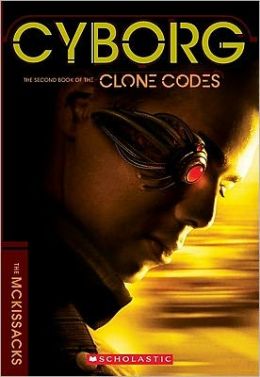
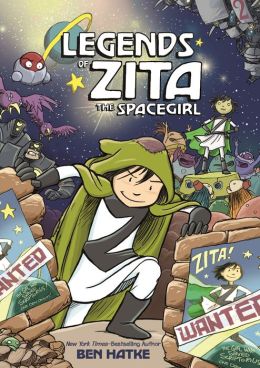
Legends of Zita the SpacegirlCyborg (The Clone Codes Series #2)In some of these, the plot is an adventure and the parents are gone mostly so the kid can act heroically. Although there is some worry about the lost ones, clearly they need to be out of the way. Zita doesn't seem to trouble about her worried folks back on the home dimension, and Leanne, friend of the Cyborg,  doesn't have a personality as much as a plot purpose, so her worries about her arrested mom come and go depending on what the plot would prefer. My kids never worry about the missing parents in these books either, which concerns me a bit. I ask them if they'd notice if I were gone, and they say probably, although if magic or robots start appearing they might be too busy. Fair enough.


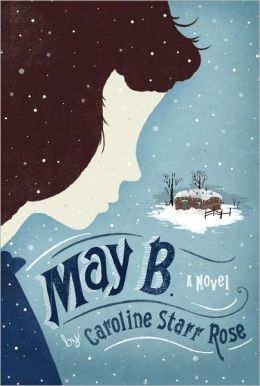
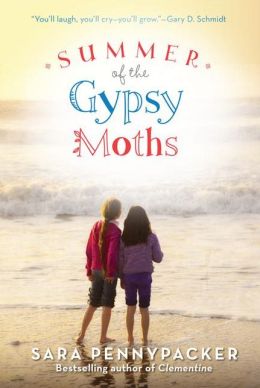
May B.Summer of the Gypsy MothsIn increasingly emotionally complex books, the parents are removed in a more realistic way. In Summer of the Gypsy Moths, two twelve year old girls desperately want to avoid foster care and so they conceal the death of their elderly guardian and survive alone in a house for a summer. May B.'s parents and employers manage to abandon her in a lonely sod house on the Kansas prairie with no way to get out or call for help. These last two are a good contrast, as May is capable of all the tasks she needs for survival, but is unwillingly alone and desperately lonely, while the lesser skilled Gypsy Moth girls not only have each other for support but could end their isolation at any time by admitting the truth. So while May cooks and manages and desperately tries to contact anyone, the Gypsy girls constantly fend off well-meaning adults to keep their isolation going while scrambling to feed themselves.


Cyborg: Clone Wars 2, Patricia, Frederick, & John McKissack. The writing is uneven enough to make me wish the author above had been pushier with her coauthors -- the characters' motivations and actions were often inexplicable (why didn't Houston tell anyone their ally was lying? Why did Leanne suddenly decide to give herself up without discussing it with her friends? Why did Toby suddenly show up a few pages before his help was essential?) It's like they think story doesn't matter if you are doing SF, especially SF with a message.

Legends of Zita the Spacegirl, Ben Hatke.  My kids and I reallly like these graphic novels, with their attractive art and fast moving story lines. I found it interesting that Zita makes some big mistakes (stealing a spaceship) although my kids agree with her that it was just necessary. I also worry about her parents back home, which doesn't trouble the boys at all. We'll keep looking for more Zita.

The Summer of the Gypsy Moths, Sara Pennypacker. Classic story in the tradition of My Side of the Mountain, the Tillerman cycle, and other independent child tales, with two young girls fending for themselves after their foster parent dies. As an adult, I found the dead body creepier than my younger self would've, but the authentic voices of the girls and their often hilarious attempts to cover up their solitude more than made up for it. Very different from the Clementine books, but still good.

May B., Caroline Starr Rose. RML. Ooo, I strongly dislike poem novels. So I got mad when she did something silly even though she was only a kid. I liked that she went off on her own, even though only a coincidence saved her life.

Thursday, March 7, 2013

Hard To Explain: Carnelians

CarneliansCatherine Asaro's Ruby Dynasty books are a bit of a guilty pleasure for me. I think her world building is inconsistent and her characters strike me as constantly astonished to find that they live in their society (in a "what, my mother the queen is a constitutional monarch?" kind of way), but reading the dialog as her characters stumble around in confusion pleases me and leaves me waiting for more.


Not to mention that as I read the series I know that she's written a book that takes place a decade or so in the future of these books that indicates that everything the good guys are trying to do will fail utterly, but the books themselves are so optimistic that I can't see that happening. La la la.

Anyway, I got Carnelians from the library and gobbled it up. It has many of the aspects I most delight in, and I enjoyed it from start to finish. One main character is apparently the accidental offspring of some people from an earlier book, despite that fact that several of the intervening books have stressed how impossible it is for these characters to reproduce without extensive help or by dangerous in-breeding. Hey, stuff happens. And she has many secret abilities that she has effortlessly hidden for her entire childhood, despite the extreme pain other characters with the same abilities suffer through attempting to conceal them. But whatever, here she is, having adventures, and being astonished that people feared and ostracized by EVERYONE in her world react pleasantly when she doesn't know to fear and avoid them. Because why would she? They are just people.

And then there are old favorites like Kelric and Roca with their wonderful, amazingly silly conversations, and the hand-waving math/internet/psychic stuff, and throw in more Delric and his rock star career, and I've got a perfect summer pool-side read. And that's before the sex-slaves show up.

Friday, March 1, 2013

Two Space Operas In Different Universes

Lost Fleet: Beyond the Frontier: InvincibleThe Lost Fleet: Beyond the Frontier: Invincible, by Jack Campbell. I'm enjoying Campbell's long string of military science fiction, following a war hero forced back into active service after a century in frozen sleep. The writing is fairly stilted, but I like the sincerity and think that it matches the earnest, boy-scoutish demeanor of the main character. I'm also enjoying the blend of gender-neutral society -- this space navy doesn't blink at having women in combat, in command, and in the marines -- and a traditional gender confusion between Black Jack and his wife or any other important female character. In true Heinlein fashion, the women usually know more but are careful of the men about it.

I got a tickle out of the cover, which shows a heroic captain with a big gun and shiny space armor, especially in light of the conversation between Jack and his wife, where she tells him that if he dies she'll carry on by writing a best-selling memoir about her life with him, complete with a cover showing him doing something improbably heroic, "maybe in battle armor. With a gun." Hey, maybe it will turn out that she was writing this whole series!

Killbox (Sirantha Jax Series #4)Killbox, Ann Aguire. I'm also enjoying Aguire's very different space opera story, with the characters leading the rebellion that cracked open society. At this point they are trying to patch things together again, an effort made complicated by the enormous alien invasion heading their way.

The contrasts are delicious -- Jax and her friends are more mercenaries than professional soldiers, and even when they are fighting for the government they don't really understand the military as a society. Jax and her lover decide to break up while they serve together, since they can't work together professionally. But they do it with angst and drama, each worrying that the other is secretly relieved to be alone again. The character's emotions often feel much more honest and realistic -- closer to how people really feel rather than how they should feel in the best of all possible worlds.

I'm enjoying both series, although they tickle very different parts of my brain.

Wednesday, September 12, 2012

Otherworldies

The cover of Otherworldies amuses me because it has nothing to do with the contents of the book.  Well, maybe it's a picture of what the protagonist will look like in five or so year; it sure doesn't look like the twelve year old girl in the story. It also promises a lot more vampire than Jennifer Anne Kogel's text delivers. It's especially funny compared with another Reading My Library Pick, Izmaylov's Galacterian Legacy, which had a cover picture of a girl five years younger than the protagonist. Good thing I picked out both books; they average each other out.


Otherworldies is about Fern, a girl who is horribly bullied by her peers at school, because she is sickly, sunburns easily, and prefers wearing her brother's hand-me-downs to designer clothes. She has a twin brother who loves and tries to protect her, an older brother who also loves her, and a hyper efficient single mother who expresses her love through high expectations and constant protectiveness. Oh, and she's also a vampire, but she doesn't figure that out for a few hundred pages (no one shows her the picture of her older self from the cover, I guess).

What makes this story interesting is the realistic stuff -- the mean kids at school, the vindictive teacher, the worried mother, the frustrated brother. But if the paranormal extras weren't there, it would be too easy to get impatient with whats-her-name; the fact that her problems stem from her extreme otherness keeps her more interesting and sympathetic. I admit that I wasn't expecting to enjoy this book; I had it pegged as an almost-YA vampire book, but its firm roots in kidlit kept the focus on character, danger, and plot rather than silly romances, so I ended up quite liking it. I'll see if my 7th grader wants to plow through it before he leaves for vacation (he's got two days left!).

Well, actually I'm posting this long after he returned from vacation, and I couldn't get him past the cover, which screamed "vampire love triangles" at him. Too bad, he would've liked it.

Monday, July 23, 2012

Sea Magic: The Changeling Sea

The Changeling SeaPatricia McKillip's books always deliver a combination of magic and emotional truth. This means that I'm not always in the mood to pick them up, since emotions are heavy things, and occasionally she doesn't get the balance just right. The cover of The Changeling Sea also deterred me; it looked like a book about a child and her mentor, and I just never had the urge to start that story. So although I clearly bought this book back in California (it's a discard from the San Mateo County Library, one of a half-dozen libraries I frequented when I lived near San Francisco), I hadn't read it until today.

http://www.flickr.com/photos/barockschloss/3569109923/lightbox/
BarockSchloss CC License
I also took a bit of a chance, leaving this book until the end of the day so that I read it straight through, instead of putting it down when things got tough, my usual cowardly approach. But it paid off; the story wove magic and love and loss together in a lovely enchantment, much as the sea turned Peri's angry hexes into webs of moonlight and beauty. Despite the cover, the protagonist was a young woman, not a child, who starts off struggling with multiple losses, including a mother who retreats from the sadness of the world. As Peri emerges from her grief we also enter into a world of magic and loss and longing, and she encounters love and friendship and greed and danger.

And, just as in McKinley's The Hero and the Crown, she doesn't insist on limiting herself to a single lover; life has tides and changes, and your heart can weather them. It's a wonderful read, although not the one promised by the cover on my copy. (The cover shown isn't the one I got; it's actually a lot more representative.)

I'll leave this around for the boys, although it doesn't really hit any of their obvious buttons.

Friday, July 20, 2012

Short Take: Freddy and the Baseball Team

Ugh -- my mouse is misbehaving, and just now it selected most of the post and deleted it. I had just written about why Walter R. Brooks' Freddy and the Baseball Team From Mars didn't work for me.
Now I'll just say that it didn't and mostly leave it at that, with the last three sentences that justify my call:

But somehow it just didn't click for me. I found the mystery too obvious and the jokes too telegraphed, and I guess I was just generally too cynical to appreciate it. Thirty years ago would have been a better time to pick this up.

http://www.flickr.com/photos/barockschloss/3569109923/lightbox/
BarockSchloss CC License

Saturday, July 7, 2012

Old Science: Doctor Dolittle's Garden

Doctor Dolittle's Garden
Another book finally made its jump from the TBR section of my house to the read-it shelves! Doctor Dolittle's Garden is the old-fashioned Hugh Lofting kind of Doctor Dolittle, dating from 1928 or so, with the Doctor busying himself with kindness and science with young Stubbins writing down notes and superstitious old Bumpo alternating college wisdom and barbarian foolishness (that last bit is rather cringe-worthy, actually).

I'm rather delighted by the book's careless refusal to acknowledge plot -- the first few chapters look at the stray dog club organized in the garden, moving in to an extended history of one of the dogs, with rather obvious satirical jabs at various adult topics that I would have cheerfully ignored as a kid. Then the doctor moves onto a study of insect languages, feeling the pages with some techno-babble that has the same attention to accuracy that I expect from Star Trek episodes (little to none, in other words). Cracking that gives us some tales recounted by maggots and water beetles, and some fine philosophy as to whether cockroaches are ever worthy dinner companions (I'm coming down with Dab-dab on the negative there), and then the subtle foreshadowings of all the side characters wanting to go on a trip while the doctor speaks wishfully of lunar traveling come crashing through with the arrival of the Giant Moth! Right in the garden!

http://www.flickr.com/photos/barockschloss/3569109923/lightbox/
BarockSchloss CC License
And here you thought this book was going to a a quiet anthropological, well, zoological study. No, suddenly it's space travel!  And Stubbin's moral dilemma -- obediently stay behind, or sneak along.

I think modern versions of this book do something with the rotten racial stereotyping, although I guess there's nothing to do about the lack of female characters -- only Dab-dab, the housekeeper appears, I think.


Thursday, June 28, 2012

Nordic Magic: Icefall

I have many reading lists going on -- I'm still plugging away at the Best of the Best books, I'm searching out state settings for my Where Are You Reading books, I'm dragging books off consecutive shelves of the library for my Reading My Library Quest, and I'm working my way through all the Cybils finalists in all of the book categories.  Oh, and this summer I'm trying to work my way through the kidlit shelf of my TBR bookcase. Some of these I do for fun (I like the beauty of my Quest, and the strange places picking a book because it's set in a state I've never visited takes me), but the Cybils list I enjoy because I'm guaranteed to find some real treasures.

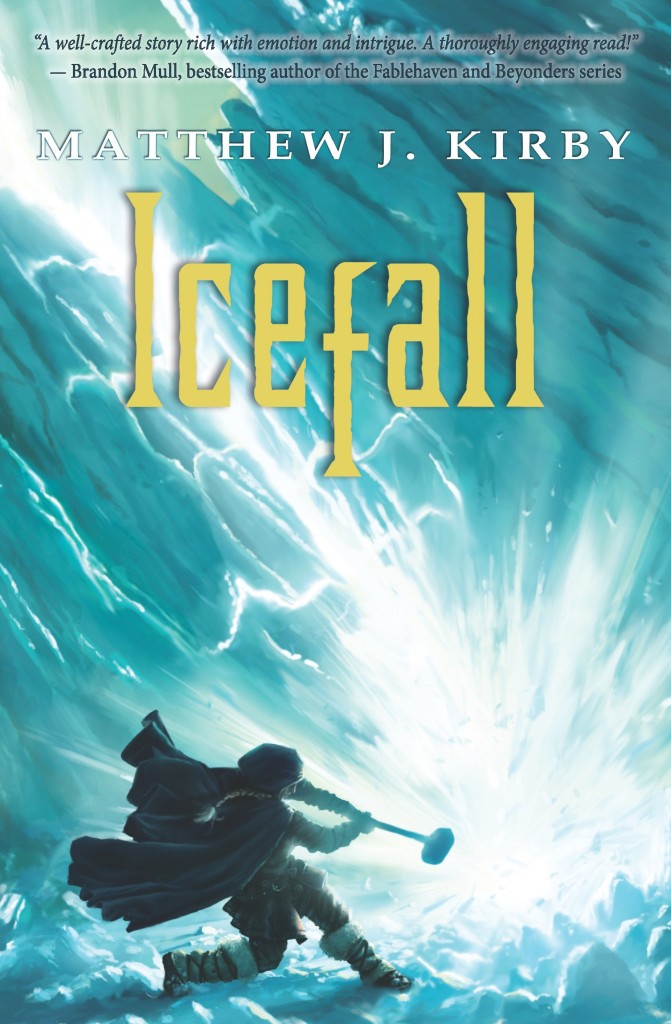
Matthew J Kirby's Icefall was one such pleasure. It's a finalist in the Middle Grade Fantasy and Science Fiction section, although it reads more as a history than a fantasy to me. There's no magic, no divine intervention, no runic power. There is a belief in gods and ghosts, a respect paid to dreams and portends, as well as a berserker power in battle that robs men of their sentience, but these seem as real to Kirby's characters as they did in a Sutcliffe novel.

Cybils2011-Web-ButtonBGThe biggest evidence of my respect for this book is that I never peeked in the back to figure out who survived or who was the traitor. Despite my usual distaste for suspense, I wanted to stay in the dark with Solveig so that I could appreciate her worries and her loyalties. I had my suspicions based on story conventions, but that actually didn't put me much ahead of the protagonist, who spends much of the book training as a skald and learning to cast her own world in terms of narrative and pacing. The vivid and real hardships and dangers were enhanced by the interior stresses and shifts as Solveig spends the winter learning how to value herself despite the expectations of others, and how to appreciate and see the truth about the people around her as well.
Sometimes I ferociously argued against her decisions and actions, but they always felt real and centered around a true personality. The setting and characterizations were strong, and the first person narration both let me see things that Solveig might miss but also taught about her connections with the other characters through what she reported or ignored.

I'm coincidentally reading Kirby's first book at the same time, and though I'm liking it I don't have the same passion as I did for Icefall. This book I highly recommend, and intend to press upon my younger son (the older one doesn't understand why I took so long to read it).

Wednesday, June 27, 2012

Serious Silliness: The Scarecrow and His Servent

The Scarecrow And His Servant
Somewhere I must have read a misleading review of Philip Pullman's The Scarecrow and His Servant, because I had the vague impression that it was a morality tale that would Impart a Lesson, probably with skill and style because this is Pullman, but still, why hurry to read that? Well, now that it turned up next in my bookcase during my Summer Reading blitz, I crashed through it, smiling on many of the pages.

I guess it does leave the impression that it's bad to coat the world in poison, which is a Moral Lesson, but it goes down easy. The Scarecrow is unabashedly a Fool, and his servant Jack serves as a loyal Sancho to help carry him away from windmills and signposts. Not that there's any heavy Quixote symbolism dragging down the sprightly story of an adventuring scarecrow and his boy; the story doesn't take itself too seriously and Jack understands what's going on, which keeps the author from continuously winking at the reader.

http://www.flickr.com/photos/barockschloss/3569109923/lightbox/
BarockSchloss CC License
I'm definitely handing this out to my boys when they get home from their European vacation; it's an fairly easy read that won't cause indigestion later.

Tuesday, June 26, 2012

Deja Vu?: The First Two Lives of Lukas-Kasha

The First Two Lives of Lukas-Kasha
I'm fairly sure that I've read Lloyd Alexander's The First Two Lives of Lukas-Kasha before, possibly even when I was the right age. It was published in 1978, and I think I was reading Alexander by then. But I like to read all the physical books in my house, even when I'm rereading the text. After all, you never know when authors will change things up or publishers have a glitch and miss crucial pages.

Reading it in the bifocal way, where I'm reading the words that I don't really remember but also reading the memories that the scenes seem to stir up, reminds me why I accumulate Alexander's books but rarely remember to list him among my favorite authors. He seems to write a bit too much from the mind even when telling stories from the heart, so that there is always a gap between the reader and the story. This is true in this book, where the emphasis on showing rather than telling keeps me aware that I'm reading a story.
http://www.flickr.com/photos/barockschloss/3569109923/lightbox/
BarockSchloss CC License

But it's still a wonderful story, with Lukas moving from a boy who revels in idleness to someone who has recognized responsibility and loyalty and knows that life without it is thin and unrewarding. I love how Alexander never explains the fantasy, but leaves the characters and the readers with the events but no explanation. Was it real? Does it matter?

I think I'll hand this book to my sixth grader to read this summer; he'll like the ambiguity and should also appreciate Lukas's pacifism.

Sunday, June 24, 2012

Stranger In a Strange Land: Magic Under Glass

http://www.flickr.com/photos/barockschloss/3569109923/lightbox/
BarockSchloss, CC license
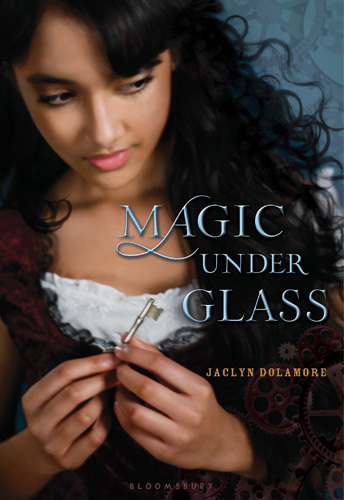
I moved up a few years for my next summer kidlit book, Jaclyn Dolamore's Magic Under Glass, which is aimed at I think middle grades. The characters are in their late teens or early twenties and act as adults, without any chaperons or protection.

I found the world building very interesting; at first I thought it was set in the London of Burnett's A Little Princess, but Dolamore is using a copy of that, called Lorinar -- close but different, which explains the Council of Sorcerers. The main character comes from a distant country, possibly patterned after Thailand, and her different appearance causes the same condescension and prejudice that it would in Burnett's London. So Dolamore gives a familiar setting but also has the ability to insert her own magic and political changes -- women wear corsets and long dresses, but there is a kingdom of fairies behind the wall to the west.

The protagonist, Namira, is an outsider so that she isn't complicit in the problems of the country and also has the chance to explain things to the reader. She's young enough to be sympathetic, but old enough to work and travel on her own, and to understand that marriage isn't just for love but also for economic security. The problems she overcomes are large enough to be interesting but still believable, and I'll keep this book for my eighth grader who will probably also want the sequel.

Tuesday, June 19, 2012

Creepy Guy: Gabriel's Ghost

gabrielsghost
I've been watching Felicia Day's online book club, Vaginal Fantasies, and their last pick was Gabriel's Ghost by Linnea Sinclair, which I read a few days after they discussed it. So I was partly primed to beware of creepiness from their conversation, but then the reason I hadn't finished it yet was because I was so annoyed by the hero's careful hoarding of the truth.

From his first appearance on the page, Sully spent so much time boasting about how bodacious he was is and how he's sure to win the body of Chaz (the heroine) that he never had time to deliver any useful information (which monsters were hunting them, what modifications he's made to the star ship drive, small details like that).  Then when a crisis happens, he's suddenly all "no time to talk -- just trust me!" When Chaz complains about this, he gets all sad, tells her Another Dark Secret or insists that he can never reveal his Dark Secrets, so she has to comfort him, which uses up all the time they could spend bringing her up to speed on whatever arbitrary decisions he's made lately.

Also, he calls her "Chazzie-girl" and spends all his time ignoring her and belittling her in between his useless professions of love and her constant displays of competence. Well, relative competence.  And I hadn't even gotten to his true awfulness, which the book club complained of.  It wasn't so much that he kept secrets from her -- he was honest about the fact that he couldn't bear any questions and Chaz accepted that. But he would do things to her and conceal that, and then be all angsty when she got mad and make her comfort him for being so sad about being a tool. Yick!

I have enjoyed later Sinclair sci-fi romances, but in this one I felt Chaz ended up with a deeply untrustworthy man.

Monday, June 18, 2012

Space Wars: Wanderlust & Grimspace

I found a space opera that I'm enjoying enough to keep reading on my NOOK; although not earth shattering literature (either in beauty or amazing plot fireworks) it has good page turning (sliding? do e-pages turn) and a fun bunch of characters. Ann Aguirre'Sirantha Jax series has proven my favorite of all her work that I've encountered.

GrimspaceI read the first one, Grimspace, for Felicia Day's Vaginal Fantasy book club. It was the back up selection, and I read it while visiting my Dad because I wasn't enjoying the main pick at all. I liked the snarky bits, and how long it took her to figure out that Marsh could hear her when she thought about him (and she mostly thought threats and insults). I liked how they killed off the alien baby, because I didn't think Aguirre'd dare do that, and I liked how Marsh got all jealous when he thought she was going to sleep with the wrong pirate (that would be the one who was not him). These were all excellent things to have in an airplane book.

I didn't like how people would drag her about, not tell her things, and then blame her when she did something wrong. Hey, if you kidnap someone, don't yell at her for spilling blood in an escape attempt because you forgot to mention the native creatures that attack when that happens. Maybe avoid kidnapping strangers is a better lesson to learn there? 

Since the first book went down so easy, and the library has them all waiting for ebook checkout, I ordered up the next book, Wanderlust.

Wanderlust coverBad: Protagonist Jax now seems very passive. She repeatedly says she'll have to lead because her crew mates somehow look to her for direction, but actually she mainly reacts instead of taking initiative. Part of it is because of her wasting illness and part of it is the bizarre and active plots of all about her, but the result is that she rarely makes plans or acts on them.

Good: She doesn't sit about whinging but deals with her situation. She has a new and strong sense of self and refuses to hand that over to her mother or her boyfriend. When she hesitates to commit to March because of her possibly terminal illness, she also refuses to take his man pain on herself -- she doesn't want to be dependent on someone else, even if he would like to be essential to him. And she won't change her mind just because this makes him sad. Yet she allows herself to love him and to let him make his own decisions. I loved it that he stayed behind to fight a soul-destroying war and promised to try to catch her up later, and that she agreed and left anyway -- it's such a refreshing twist in a romance -- two adults respecting each other as people even when they disagree or have different goals.

The plot still seems rather convoluted; I have no idea why the people hoping the mission succeeds picked her as ambassador since she has no qualifications or even any demonstrated ability (see war raging on.  I'm not even sure why the people hoping for Jax to fail bother interfering, since she seems so unlikely to complete any diplomatic move; she's more likely to accidentally cause a mortal insult while looking for a bathroom. For a while I thought I had those groups confused (pro-mission people were the ones kidnapping/assassinating her, anti-mission people protected her), but that was wrong. Maybe this will become clearer in the next book. And I do want to read the next book, and my library is happy to oblige me.


Friday, June 15, 2012

Angels In LOOOOVE: Angels' Flight

angels' flight
Nalini Singh gathers four stories from her Guildhunter series together to look at action and sex in Angels' Flight.

The first, "Angels' Pawn", actually skips the sex to leave the couple in a state of high Unresolved Sexual Tension. She's a vampire hunter, he's a vampire whom she often hunts, and together they fight crime help the archangel keep order among his minions. In between solving the case, they admire each other's bodies.

"Angels' Judgement" gives us the backstory on secondary character Sara as she ascends to leadership of the Guild and acquires her ginormous lover Deacon. It's interesting that the woman in both these stories has more power in the relationship and in their professional life. This time the story is long enough for them to have sex, and I like the way that Elena walks away from him because her job is more important. Luckily Deacon quits his job so they can be together again -- HOT.

"Angel's Wolf" has the first male lead, as a traumatized vampire comes to work for a powerful but lonely angel, and they heal each other. How sweet, and rather dull. I had read this one a few weeks ago in a shared anthology, so I didn't bother rereading.

"Angels' Dance," the longest story, has one of the strangest conflicts -- it's nonexistent. Jessamy is a crippled angel whose wings don't work, Galen is a buff guy who doesn't like to wear shirts. They fall instantly in love but then Galen worries that she only feels gratitude because he flies her around. So they don't talk to each other for a year or so, despite living in the same large building. They don't even argue, they just spontaneously start ignoring each other so they can be depressed in alternating story sections. Then for no reason they get back together and live happily ever after, including some spectacular sex-in-flight (that's the title dance). As an anthropology-style slice of angel community, it's interesting, but as a romance it's rather pointless.


Monday, June 4, 2012

Can't Touch This: Within the Flames

within the flames
Within the Flames, the latest (eleventh?) book in the Dirk and Steele series by Marjorie M. Liu, pairs firestarter Eddie with a lost dragon shifter girl, who lives a hidden life with her arm permanently scaled as a dragon ever since the mysterious demon witches who still pursue her attacked her parents, secure in the knowledge that both families had abandoned the couple because of the forbidden nature of their love. Despite the twists of that paragraph, this book didn't have quite as many plot twists and additions as the best of Liu's books, which lightheartedly throw everything and the kitchen sink at the paranormal couples at their core.

I expect this is because at this point in the series there is so much already in place that adding more because redundant as well as difficult to squeeze in between all the back story -- there's the Dirk and Steele detective agency itself, with its reclusive telepath chief and its alliance with the hidden family of magicians against the evil family branch of magicians called the Consortium, and there are the gargoyles with the elaborate loyalties and fears of witches, and the various shape-shifters, and I don't think the mermaids get mentioned at all this time, and, and and. So the new dangers of blood-seeking demonspawn barely gets an eyebrow raise.

I felt a bit disconnected from Eddie -- I vaguely remembered him from previous books, where I think he was a strong secondary character, but not enough that the outlines of his current super-angsty position made much of a connection. And Lissa never really seemed real -- the poor girl of a Romeo & Juliet style marriage who is shunned by friends and stalked by foe -- oh well. It's all right for fans of the series, but I don't recommend it as an entry point. I put up with their mournful and lost glances at each other because I felt confident that something crazy would happen soon, but new readers may not have the patience.

Saturday, January 21, 2012

Bad Men: The Terrorists of Irustan

The Terrorists of IrustanLouise Marley writes smart and emotionally resonant books that explore particular ideas, whether it's an examination of a violently patriarchal religion or a link between ghosts and musical instruments or children that blur the line between saviors and victims.  The Terrorists of Irustan is the patriarchal book, where veiled women pass from their father's control to their husbands in a religion clearly based on conservative Islam.  On the planet Irustan this religion is complicated by a strong taboo placed around the body, so that only women can address illness, which means that the only educated women are the medicants who train on the complicated medical systems provided by the galatic government.


Marley examines the women's lives from different angles, looking primarily at the educated Zahra who struggles against the restraints binding her, but also from the galactic Jin-Li, who has problems with gender issues.   In clear parallels to the modern world the galactics tolerate the limits placed on women in the name of religious freedom and the valuable minerals Irustan provides, but this also involves compromises and betrayals.  However, the connections between Islam and the Book are too close for comfort; Marley has made up her own planet so she controls all the events but that makes the statements about anything in the real world suspect.  I would have preferred either fewer similarities or a clear identification; the book itself ends up muddled as the answers come too easily.  (Well, the author's answers; the characters themselves have tough times.)

It was good enough that I'll keep an eye out for more of Marley's books, but I hope she takes her imagination farther afield next time; sometimes distance is necessary to get the focus right.

Thursday, January 19, 2012

Flickering Memory: White Night

For the Christmas holidays I drive from Seattle, WA to Salt Lake City, a fairly easy day's drive, and I usually pick out audio books from the library to accompany me.  I like audio books, especially while driving, but I prefer to listen to books I've read before, because if the suspense gets tight I hate that I can't just listen faster to move along.  I've enjoyed most of Jim Butcher's Dresden Files books, and I've heard good things about James Marsters as the narrator, so when I saw White Night on the library CD shelves I grabbed it.

It turns out that my BIL had the BBC radio adaption of the Lord of the Rings, which easily trumped all my offerings.  Just as well; I had forgotten about all the swearing that Dresden indulges in, so it would have been awkward to listen if the kids weren't sunk deep into their headphones.  But I've been listening to it during my solo trips in the car and really enjoyed the performance; the Dresden books are all written in first person and the narrator really captured the feel of the self-assured, cranky wizard as he fights bad guys and saves the helpless and never forgives himself if anyone on his watch gets hurt.  There are some graphically violent scenes that are probably more vivid to listen to since I think my eyes tend to skitter across when things get too grim.

The funny thing is that I can't remember if I've read this before or not.  That's not too uncommon when I start a book, but usually by the end I've figured it out.  I vividly recall the scenes about Harry's brother Thomas, especially when Harry and his giant dog invade his brother's apartment and he has to pretend to be Thomas's disgruntled lover, or where Harry and his brother fight together on a boat, but I have zero memory of Elaine, Harry's old lover and a major character in this book.  She's also there on the boat fight, and everything about her involvement seemed fresh.  Bits of the final fight scene sounded familiar -- the parts where Thomas shows up to help.  The rest? Blank slate.  I checked my list of books read, but I only have since 2007 in electronic form, so I know I haven't read it since then.

X really enjoyed all the bits I let him hear, so I've ordered up the print version of the first Dresden Files book.  We'll see if he likes it even without Marsters whispering in his ear.

Saturday, September 3, 2011

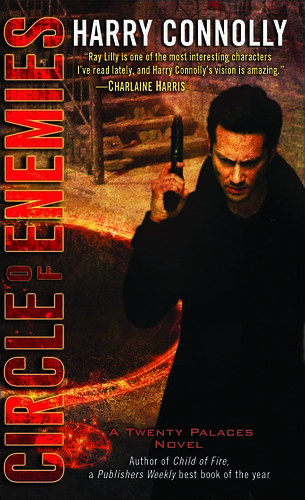
Tough Guy: Circle of Enemies

Circle of EnemiesHarry J Connolly's Twenty Palaces books are among the most interesting urban fantasy ideas on the market today.  The protagonist, Ray Lilly, is an ex-con forced into a world of magic and danger, working for people who despise him but who try to stop magicians from destroying the world.  Ray has slowly been learning about his employers, becoming more and more uncomfortable with their ruthlessness even as he sees the horrible dangers they battle.

In the third book, Circle of Enemies, Ray goes back to the friends he had before his life changed so drastically, before he met a magician, before he went to prison.  At the same time, he goes farther into the Twenty Palaces organization and directly confronts the policies and people that seem almost as awful as the alternative.  Almost.  Connolly presents it all through the eyes of Ray, who doesn't try to conceal things but also doesn't always like to examine himself too closely, who doesn't seem to respect himself even as he refuses to let himself give up on anything or anyone.  It's a gripping combination of characters and situation, and finishing the last book makes me want to start the series all over again.  Good work, and keep writing.
Thursday, July 7, 2011

Fuzzy Friends: Little Fuzzy

Product DetailsOne of the advantages of a NOOK is that there is more free stuff easily available.  Knowing this, I finally wandered over to gutenburg.org and pulled down some stuff and figured out how to put it on my ereader.  Heading my list was Little Fuzzy by H. Beam Piper, mainly because John Scalzi wrote a reboot that I planned to read eventually.

Well, last week the library skipped me ahead three weeks and sent me Scalzi's book, so I moved Little Fuzzy much higher on my reading priorities.  Just as I like to read the book before I see a movie, I wanted to reread the original before trying the remake.

I enjoyed it as much as I remember doing several decades ago.  It's space fiction without a lot of emotional wailing; frontier dudes with exotic practices like cocktail hour on planets with funny names.  The emotional connection between the fuzzies and Jack the rough-hewn prospector was skimped a bit, but that was made up for with all the telling science fiction details, such as the judge's homemaker wife and the woman scientist/spy quitting her job when she gets married.  It's a double blind, with the stuff that probably was just standard when it was written now seeming quaint, but then again I'm probably accepting without even seeing things that were adventurous when written.  I vividly remembered the suicide, which I found very shocking in my youth.  I'm looking forward to seeing what Scalzi did with the story (first contact tale, or legal thriller?), but I also want to go back and read the original sequels.