Showing posts with label 20/11 Challenge. Show all posts

Saturday, September 3, 2011

Tough Guy: Circle of Enemies

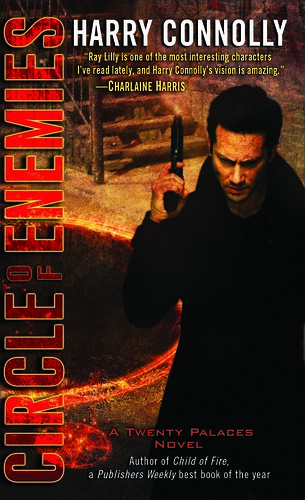
Circle of EnemiesHarry J Connolly's Twenty Palaces books are among the most interesting urban fantasy ideas on the market today.  The protagonist, Ray Lilly, is an ex-con forced into a world of magic and danger, working for people who despise him but who try to stop magicians from destroying the world.  Ray has slowly been learning about his employers, becoming more and more uncomfortable with their ruthlessness even as he sees the horrible dangers they battle.

In the third book, Circle of Enemies, Ray goes back to the friends he had before his life changed so drastically, before he met a magician, before he went to prison.  At the same time, he goes farther into the Twenty Palaces organization and directly confronts the policies and people that seem almost as awful as the alternative.  Almost.  Connolly presents it all through the eyes of Ray, who doesn't try to conceal things but also doesn't always like to examine himself too closely, who doesn't seem to respect himself even as he refuses to let himself give up on anything or anyone.  It's a gripping combination of characters and situation, and finishing the last book makes me want to start the series all over again.  Good work, and keep writing.

Sunday, July 31, 2011

Vacation Catch-Up

I have been warming myself in a state with an actual summer, but due to a strange digital architecture, I was unable to blog.  This means that the network connection from my bed was poor.  This seemed to be an enforced vacation maneuver, since everywhere else in the room was fine; just not the bed.  I took it as a sign.

But I kept reading!  So here are five books that I've read, to start to make up for the ten days without reports from me.  I read them all on my NOOK; all but the last were borrowed from the library.

  1. Over the Edge (Troubleshooters #3), by Suzanne Brockmann.  Since I liked half of the Brockmann's I read before, I thought I'd give this ebook a try.  It was a bit too long but readable, with rather silly romance misunderstandings mixed in with rough, tough anti-terrorist plot action.  The main romance was easier to take; although the helicopter pilot and the tough Sergeant kept misunderstanding each other, they had fairly solid reasons for not talking to each other, at least for the first 50 or so pages.  She's young but vulnerable and thinks he thinks she's just a kid.  He's older and uglier, and thinks she wants someone closer to her age.  The secondary romance was more annoying -- the couple disliked each other but were wildly attracted until they suddenly realized it was TRUE LOVE, and then a foolish pregnancy subplot ruined everything.  A final historical subplot also annoyed and bored me -- a Danish maid and the son of her Jewish employers fall in love, but his parents disapprove because they are BAD.  I probably won't look for more books by Brockmann, although maybe I'll try her gay short story because if the romance is all men I won't have to worry about a stupid pregnancy plot twist.
  2. The Cardturner, by Louis Sacher.  This is a love story and a ghost story about bridge (the card game).  It's a good thing that I've always liked Sacher's books, because otherwise I doubt I would have touched it with a ten foot pole, but I trusted the author and he delivered.  I liked watching the hero become fascinated with bridge tricks, although I found his family more of a caricature than characters.  I've recommended it to my bridge playing friends.
  3. Confessions of a Prairie Bitch: How I Survived Nellie Oleson and Learned to Love Being Hated, by Alison Arngrim.  I seem to have stumbled into an appreciation of celebrity memoirs, but although the writing wasn't as smooth as Steve Martin's this story of growing up in a Hollywood family, most happily on the set of Little House on the Prairie was also entertaining.  Arngrim is matter-of-fact about some of the unsavory parts of her story, mostly based around her family, and amusing when she described the bizarre interactions she had with fans of the show, who usually hated her.  At the end, she's proud of using her childhood fame to help strengthen laws against child abuse, a very personal cause.
  4. Weekends at Bellevue, by Julie Holland.  Once I got over my culture shock in the first paragraphs (I picked the book because I remembered seeing in on a "local interest" table at a book store, but the Bellevue is not the nearby small city but New York's crazy hospital) I found this memoir gruesomely fascinating.  Holland does a good job describing the variety of people who end up, by choice or circumstance, at the emergency room of her mental hospital (she ran the ER on weekends for many years).  I found the personal descriptions of her life more distancing; I don't think I'd want her for my physician or possibly my neighbor, but neither of those seem likely. 
  5. Ghost Ship, by Sharon Lee and Steve Miller.  Another piece of the Liadan story, with all the usual strengths and weaknesses.  The plot lines for Theo Waitley, Clan Korval, and mysterious technology bits come together with a fun page-turning eagerness, but I wish for a greater sense of jeopardy -- too often strange coincidences save all our favorite characters, who are all guaranteed true love and happiness.  I was set to love the ending, but then the final pages left all in doubt again.  Hey -- last book in the series (for now) -- that's a 20/11 Challenge category.

Wednesday, June 15, 2011

Nicey Nice: Aunt Dimity and the Family Tree

Some mysteries are all about the bleakness of existence, with the lonely, sometimes slightly sinister hero battling the forces of evil, the darkness that lurks within all humanity and stains the fabric of existence.  Nancy Atherton's cosy mysteries featuring the deceased Aunt Dimity and her dim-witted adopted niece Lori are not about that.  They are about a world that is nice.  Lori lives in a nice English village with her nice family and nice neighbors, enjoying a nice amount of money.  She is kept busy caring for her nice school aged twin boys, with only the help of an endless supply of nurses, a full-time riding school with enormously flexible scheduling, and endless nice neighbors begging to step in.

It's getting a bit difficult to read these books, honestly.  The latest one, Aunt Dimity and the Family Tree, follows the standard Dimity path of setting up a farcical situation, having Lori notice the sinister implications of the new characters' actions, and then having a nice resolution instead of the malicious motives Lori projected.  It's an interesting twist on the usual practice of having dead bodies show up all over the small village where the cosy mystery protagonist lives, but after all this niceness the sight of the occasional (fictional) mass murderer seems almost welcome. C-

Thursday, May 26, 2011

Bad to the Bone: Blackout

Blackout 1240x2000 BLACKOUT: Cal Leandros, Book 6Rob Thurman writes an urban fantasy series that I haven't been reading. The latest installment, Blackout (Cal Leandros, Book 6), is clearly an attempt to lure in readers who usually hesitate to start in the middle. Since I am a reader who delights in starting in the middle, I figured I'd encourage authors to encourage this by reading the book.

The gimmick worked for me; Cal Leandros wakes up on a beach with amnesia, and starts trying to figure who he is and what he does. His frantic brother finds him quickly, but his memory returns very slowly, giving him most of the book to interact with his former friends, peers, acquaintances, enemies, and lovers. Thurman doesn't bury the current story with backstory; in fact, Cal's family deliberately lets him rediscover most of his background instead of pushing forward with their memories of him. This gave me a slow and fun introduction to the setting and characters, which is important since both have some rough edges that might put me off. I'm off to get the first book in the series now, because I want to see if Cal was right about who he was, and what his brother does for him.

Saturday, May 7, 2011

Too Old For Beauty: The Scarlet Pimpernel

This lush and romantic tale of the French Revolution by the Baroness Orczy has the lovely Marguerite watch helplessly while the dashing and clever Scarlet Pimpernel battles the diabolical M. Chauvelin for the lives of French aristocrats in the path of the guillotine juggernaut.  It has vast sweeps of emotion, true love battling pride, sisterly love opposing romance, and I can see myself eating it with a spoon only a decade or so ago.  Alas, though I enjoy it still for the sake of past-me, I can't quite get caught up in the whirlwind anymore.  Cranky current self finds these kids just a wee bit too emo for comfort; when Blakely kisses the steps Marguerite just walked on, instead of sighing tragically I wonder how clean the stairs are.  When Marguerite realizes THE TRUTH too late and begins her frantic dash to join her beloved in danger, I find myself wondering what she hopes to accomplish.  As it turns out, she doesn't actually do anything, but does get kissed again much sooner than if she had waited at home, which old me would have considered sufficient reward.


I also wish that just once, even accidentally, she could have done something right. Or at least that the author had stopped assuring me that she was the wittiest woman in Europe as she wanders the countryside without a thought in her pretty but disheveled head.  But, ah, womanlike!, she never concerns herself with practicalities.

(The picture was taken by helen.2006 who posted it on flickr with a shared license. )

Friday, May 6, 2011

Cherry Blossom Book: The Housekeeper and the Professor

The Housekeeper and the Professor: A NovelBookNAround reviewed The Housekeeper and the Professorlast January, but apparently a lot of people were influenced by her enthusiasm, so my library queue took until late March to disgorge it for me.  Yoko Ogawa's story is told exclusively by the housekeeper, a pragmatic woman who has been working to support herself and her son since she was seventeen.  She seems lonely, but unwilling to waste time on her own emotions when she barely has time for work and her family as it is.  But she still has the compassion to befriend the professor, a man with a permanent brain injury that prevents him from remembering anything new.  His current memory only lasts 80 minutes; each morning he wakes up with no memories of his life since the accident that damaged his mind.

The story concentrations on actions rather than emotions, letting the reader understand from the movement what the characters are feeling.  This leaves the emotions somewhat abstract, strongly felt but not verbalized, more a poem than a paragraph.  The relationships between the woman, the man, and the boy (her son) are based on immediate events -- love of baseball, the math facts and ideas the professor eagerly shares, the routines the housekeeper sets up for them.

The book is translated by Stephen Snyder, and I think I'll start looking at translators more closely. So far I really like the style of almost every Japanese-translated book I've read, and I'm not sure if what I like is the translation style or a Japanese style of writing.  It's a sparse style, where a deceptive simplicity allows a beautiful and powerful story to develop.  The picture of a cherry tree works well as the cover of this book with the delicacy and stunning loveliness of a blossom. A

Thursday, May 5, 2011

Strange History: Thendara House

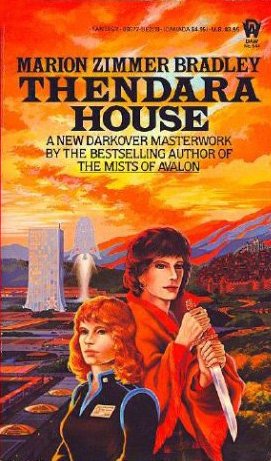
Thendara House (Darkover Series)Somehow I missed most of the Marion Zimmer Bradley Darkover books, which I associate with the seventies. Actually a lot of them came out in my teen age, when I should have been perfectly timed for them, but I didn't get hooked.  But when Jo Walton reread some for her tor.com re-read series, I became intrigued enough to pick one up second hand, and then eventually to read it.


Thendara House (Darkover: Renunciates Trilogy, Bk. 2) feels a bit like a thought experiment, and a lot of it feels very dated.  It contrasts a Darkover woman trying to live and work in the modern Earth society and a Terran citizen trying to achieve status in a rigorous Darkover sisterhood.  The back copy describes it as "two cultures, one male-dominated, one egalitarian" which is true although in the book it is the Terran society that seems male-dominated, although only because the Terran woman immerses herself in an all-female enclave, so that it is egalitarian as a matter of course.  The Terrans pride themselves on their equality, which seems quaint as Bradley shows them as incapable of grasping the concept of a woman keeping her last name after marriage.  The Terrans do not appear in a favorable light, being too busy making assumptions to ever see anyone clearly.  But the Renunciate society feels too contrived to be convincing.

Most of the time is spent deep inside the heads of Jaelle and Magda as they negotiate their new environments.  They often have wide emotional swerves, many of which they recognize but cannot control.  It's an interesting look on what defines femininity and personal responsibility, if a bit claustrophobic at times.  I'm left with an interest in more books of the series.  B+

Sunday, May 1, 2011

Family Ties: River Marked

cover imageIn River Marked ,Patricia Brigg's next installment in the life of mechanic Mercy Thomas, the part-time coyote, full-time professional mechanic marries werewolf Adam and explores her old family as she works on building her new one.  The love between Mercy and Adam is a bit cloying but leavened with maturity; it's nice to have paranormal heroes emotionally in their thirties instead of the late teens.  They test the bounds of trust and faith in each other -- how much risk can they tolerate the other accepting? What limits are fair?

Meanwhile, Mercy looks backward to her mother and her father.  The beginning of the book plays with the mother/daughter bond in the ridiculous wedding Mom threatens, and then the middle of the book concerns itself with Mercy's unknown father, and the Indian cultures he comes from.  Mercy has always felt alienated from her father's people, since her dad died before even knowing her mom was pregnant.  She never found anyone to help her with the more unusual parts of her ancestry (the whole turning into a coyote thing).  Now she finds people who expect her to value her father, and to know more about her heritage.  It's a good combination of fun characters, active combat, and rich themes --all this discovery takes place while a giant river monster threatens everyone in contact with the Colombia River.

One complaint -- they camp on the Washington side of the river, which means I can't really claim this as an Oregon book, despite the restaurants they visit over there.  B+

Wednesday, April 27, 2011

Book Club Pick: Tooth and Claw

Tooth and ClawIn honor of Jo Walton's new book, Among Others I talked our book club into reading her old book, Tooth and Claw. (We are a library using book club, so we often check wait lists before selecting new books. We were contemplating the Henrietta Lacks book until we saw the triple digit wait list, for example.)

Most people enjoyed it, except for my sister, who is blind to the charms of Walton. I don't think she's ever forgiven Suzien's rape in the first pages of The King's War, so all other books are treated with suspicion. I hadn't read it in years, and my copy has disappeared so I bought a new one, which had a disappointing white cover instead of the elegant red dragons on the paperback I remembered.

I mostly remembered the lawsuit, but forgot all the gender politics, which this time were my favorite parts of the book. I loved the parallels between dragon society and ours, both present time and in the England the book recalled. Tying wings, cannibalism (and not just of Irish children), women's reputations being ruined by a man's momentary carelessness or aggressiveness, train travel, it was all good.  A

Tuesday, April 26, 2011

Mistaken Recommendation: The Game of Kings

Game of Kings
I read The Game of Kings (Lymond Chronicles, 1) by Dorothy Dunnett because I associated it with the friend (MM) who got me hooked on Georgette Heyer.  Except when I asked her she had never read anything by Dunnett and wondered if the books were good.  It's a fortuitous misunderstanding because I ended up thoroughly enjoying the book but would never have persevered beyond the first seventy pages without the imaginary recommendation.

The main problem was my lack of education.  My Latin is weak, my French non-existent, my German rusty, my Greek juvenile, and my Spanish confined to menus.  So when the characters use quotes, make multi-lingual puns, and recite poetry that comes so easily to their lips, and which everyone in the scene usually immediately understands, I'm left sitting in the dunce seat feeling lucky to understand a single word.  Dunnett also takes her time setting up the characters, and spends a lot of the time blackening Lymond's name, but he's apparently the hero of the whole series, which is a bit confusing.  But at some point the sweep of the story caught me up, and then at the end when all the poles started to line up the pay off was terrific.  So I'm off to read the next one, and I shall just forgive myself for not understanding any of the non-English jokes.  I blame society.  A

Wednesday, April 13, 2011

Loyalty: Silver Borne

cover imagePatricia Briggs writes an urban fantasy series about Mercy, with werewolves and shapeshifting and vampires and stuff. What keeps them interesting for me is that Mercy's concerns are fundamental; in a situation with bizarre contingencies she has to concentrate on the same basic worries that anyone does. In Silver Borne (Mercy Thompson, Book 5), she's in love with an older man; he's richer and socially more important than her. How can she still maintain her autonomy and self-respect? The fact that the man is the head of the local werewolf pack and the pack has magic abilities to subvert her emotions just throws the problems into vivid relief; it doesn't make them alien.

So I care as Mercy juggles responsibilities towards her wounded friends, her fiance, his family, her employee's mother, her acquaintance who did her a favor and now seems to be in some danger because of it. The recurring theme is loyalty -- to oneself, to one's friends, to one's moral code. And I'm looking forward to the next installment in her life, so I can see how she handles her mother as well. I tend to buy Brigg's books for my shelves, because they stand up to rereading, probably because they do tend to organize themselves around a theme, if you look beneath the faerie glamor and silver bullets. I finished rereading this one just in time to move right on to the new book. A-

Monday, April 11, 2011

WWII on the Axis Side: Don't Say a Word

I've mentioned my youthful obsession with WW II books.  Most book are written by enemies of the Germans, either Allies or Jewish refugees.  Occasionally there will be a book about a Hitler Youth, but they usually reform by the end.  There aren't many books about patriotic Germans who don't like what the government is doing but try to get along with honor and survival.

Barbara Gehrts' Don't Say a Word fits that description.  Gehrts explains in an afterward that her book is heavily based on her personal experiences, and the vivid descriptions and often clear viewpoint suggest that her memory is a good one.  She says she wrote the book after hearing a youthful debater dismiss the fear of violence as trivial, as she was appalled.  The story follows a German family in Berlin, at first protected by the father's position in the Luftwaffe but still precarious because they aren't Nazi's.  Neither are they heroic underground partisans; they are afraid to do much to help their Jewish neighbors or to let anyone hear their complaints about Hitler.  Their battles are small and believable, with spurts of bravery followed by hesitance and fear.  The father keeps his battles against Hitler as far from his family as possible, which means that they survive after his discovery and arrest.  I enjoyed viewing this new perspective, and seeing how the time lines of the war looked from inside the Reich.  I'm glad Alex at The Children's War reviewed this book so I knew to look for it.  B+

Tuesday, April 5, 2011

Free Fable For My Nook: The Princess and the P----

I got a Nook! My sister gave it to me for my birthday, because she is super nice. She's my favorite sister.   brought it home and admired it and called it George. Well, actually I called it Rose winner, after my sons' middle names, but the feeling is there.

Cover image for I'm also cursed with an awful cheapness, because I couldn't get BN.com to recognize my membership, which means I wouldn't get the 10% off. Horrors! I can call tomorrow to fix it, but in the meantime I browsed the free books. When I saw the title "The Princess and the Penis" I remembered it getting a favorable review from somewhere. So I grabbed it. At 91 pages it seemed a good short book to practice reading my Nook. The story follows a princess kept pure of all knowledge of birds and bees (or the frogs and the flies) who starts sleeping badly because of a bump in her rump. The nocturnal nudging (the book delights in any sort of cheap wordplay) is caused by a phantom phallus that challenges her father's beliefs about what girls should know and what is really important in a husband. It's like a combination of The Princess and the Pea and the Princess and the Frog.  Only, you know, with a penis.

Despite the title, the book is more wink wink nudge nudge than racy, certainly far less graphic than most romances. I wouldn't give it to my sixth grader to read; the inner twelve year old of a twelve year old is far too close to the surface.

Wednesday, March 30, 2011

Words or Deeds: Eli the Good

How do you say "I love you"?  Just by talking or by cherishing someone with your actions? I'm a strong believer in actions -- filling my kids' bureaus with clean laundry, coming up with (cooked) food for them, dragging them from Plants vs Zombies and forcing them to read with me, that's how I tell them I love them. Oh, I'll throw words at them fairly often; all the parenting books tell me to.  But I don't think words mean much compared to actions, as I tell my youngest when he whispers sweet nothings to the cat complaining about an empty food bowl.


But I acknowledge that some people need words.  Silas House's Eli the Good has a character who only believes in words, who needs words so much that he sneaks about eavesdropping at every opportunity and plots to steal his parents letters so he can see words they sent to each other before he was born. The book covers Eli's tenth summer, the summer of the bicentennial, and the people he loves most are changing about him in ways he doesn't always comprehend.  He wants to be good, which is often harder than being great, but finds himself often coming up shorter than his dreams yet still managing to keep his connections to his family and therefore to himself.

The book keeps its distance from me, even when describing family traumas such as the bitter fights between his sister and his mother, or his father and his aunt, because the story is filtered through the adult Eli's memories of that summer.  But the intensity of the feelings shine through, from the horror of the Vietnam war memories to the moment when Eli truly believes in his mother's love for him (because she tells him; words always speak louder than actions for Eli).  B

Thanks to Random House and LibraryThing Early Reviewers for sending me this book.

Thursday, March 24, 2011

Misconceptions: Trust Me On This


Jennifer Crusie
 writes swift moving, taut romances about smart women meeting smart men and finding ways to come together, and she usually puts in enough twists and turns to keep me laughing while it happens.  In the caper comedy Trust Me on This (Loveswept), everyone comes in with an agenda, and the confusions and misconceptions keep the plot turning without further intervention from the author.

I liked that the side romance was for an older couple, and that no one thought that love conquers all, or that really good sex meant that they were fated to come together.  I liked that I kept smiling while I read the book, and only occasionally grimaced at the horrible mistakes about to happen, and at least those mistakes weren't because of gross stupidity.  It's fairly obvious that this is an earlier book, but it's still a fun one.  A great choice for reading on lines at Disneyland.  B

Monday, February 28, 2011

Music For the Deaf: Five Flavors of Dumb

I remembered that Five Flavors of Dumb by Antony John had won an award, and after reading this delightful YA novel about the novice manager of a high school rock band I went looking to see which award. I checked the Cybils (blogger awards) and then the ALA lists of YA book winners (Printz and Alex awards) but didn't find it, and finally found the Schneider award for a book about the disability experience, which is a bit ironic in that the main character, Piper, is Deaf but certainly doesn't consider herself disabled. But I would have nominated it for all of the above.

Anyway, I loved the book. I liked the family dynamics, with the family starting off rather disconnected by a series of shocks, including the father's unemployment and the baby's expensive operation to allow her to hear, paid for (surprise!) with the money from Piper's college fund. So Piper is intrigued by the idea of earning money by managing a band, which propels her into another community -- the three (soon five) members of Dumb, recent winners of Seattle's Teen Battle of the Bands. Piper narrates the story, which often had me laughing out loud or scanning ahead to see how things ended up. I particularly liked Piper's relationship with her younger brother Finn, who manages to save her band many times over the course of the book.

The book is set in Seattle, so I had fun recognizing places, especially Jimi Hendrix's burial spot, which is just up the road from my house. I found this book through Becky's Book Reviews, which makes it a challenge book! Woot! A

Sunday, January 23, 2011

It's All My Fault!: All Clear

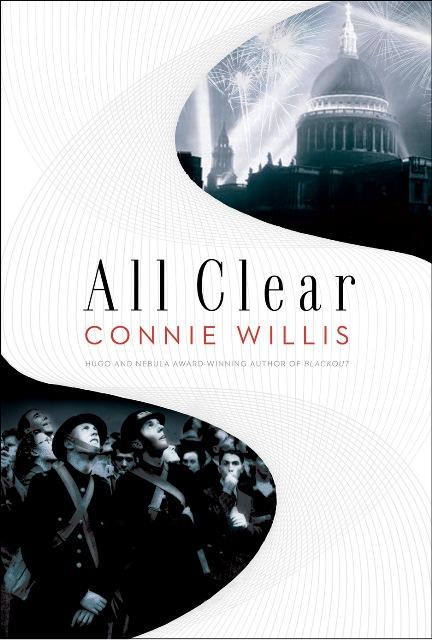
All Clear is the second half of the story Connie Willis began in Black Out, about historians in the future using time travel to research historical bits that catch their eye. World War II is a popular research destination, and the story follows three students who find themselves trapped in their research posts when their retrievals go awry. The first book is spent with them wandering about separately; in this book they come together except when they go apart again. And then there are the non-chronological bits, as you expect in a time-travel book.

Willis always has strong page-turning abilities, so despite the huge numbers of pages the story moves quickly. I'm not sure why it was two books; it seems like the story could have fit more neatly into one, as every point was made several times over. Several times things went wrong because one person knew something but didn't share with the others, and only realizes too late what a mistake that was. The first time I can accept, but they did this over and over again, without ever learning from the past. Usually the reason for keeping a secret was to avoid worrying each other, which became even more silly as they face the increasing problems of the blitz.

Another few hundred pages were spent on them angsting over having changed the future, which struck me as extremely silly because they had inserted themselves into the past on purpose, after having discussed for pages on why it was safe. Then they (and especially Polly, the main character) notice that they do actually have effects on people -- they talk to someone and make them catch a later bus, for example. Sometimes that's the difference between life and death, if a bomb lands just right. Perhaps they've affected the future so there is no one to pull them out? And so now the Germans will win WWII? But it never made sense to me, especially with all the talk about time as a chaotic system. Of course sometimes people miss a bus. Get back to details of shop life or something.

Willis is wonderful at tight connections, especially ones just missed. The night St Paul's cathedral almost burned down is done brilliantly, with all three characters weaving crazily in and out of danger and history and close encounters with other historians, but never quite getting rescued or killed. Mike's contrast between his initial thesis on "heroes in history" and his actual understanding of people in war touched me. One of the best parts was watching the historians move from treating the people they were studying from test subjects (the 'contemps' do such and such) to actually believing they were worthy of consideration and respect. Sometimes I just wanted to shake the time-travelers for their arrogance, which made their final actions even better.

Oh, I don't believe in Polly's final love story either, but it didn't seem that important.  B-
Monday, January 17, 2011

TwentyEleven Challenge

The TwentyEleven Challenge

I don't think I have a firm understanding of what the word "challenge" means. I like to sign up for ones that I'll probably do accidentally anyway (like the ABC challenge, which I may sign up for again this year). Or ones that just nudge me to pick books a little bit differently, or to try things I might not try without them.  Definitely not ones that make me work hard or anything.

Bart's Bookshelf is hosting a TwentyEleven challenge, with a goal of reading 20 books spread among eleven categories.  You can pick which categories get short-shifted.  I'm not sure what he'll do in the year 2021, unless you just get to skip a category completely.

His categories (link goes to his list of reviews) are (and hopefully I'll keep a list of what I use for these categories):
  1. To YA or not YA (probably means not for me, so Adult Fiction books)
  2. With a Twist -- twist up a favorite genre.
  3. Hot off the Presses (2011 publish date)
  4. It Wasn't Me -- book recommended by a blogger, with the post that did you in
  5. Show It Who Is Boss:  Books from the TBR pile
  6. Bablefish -- translated book
  7. Will-Power? What will-power?  Book bought new in 2011
  8. Mind the Gap -- finishing up a series
  9. Back In the Day: a re-read
  10. Way Back When -- book written before my birth
  11. Slim-Pickings -- novellas (90-150 pages)
Total: 20! Books In other challenge news, I'm current on the Comment Challenge, and have checked out books but not started them for the Cybils and Michigan ones.  Both kids read the MG graphic novel (Athena, Grey Eyed Goddess) and gave it thumbs up, though.  I like my new habit of storing challenge books next to their computer.

Saturday, January 15, 2011

Uh...: Sweet, Hereafter

Sweet, HereafterSometimes I read a book and get the feeling that I completely missed something, that there is probably a giant bear dancing about and I just didn't notice.  Sadly, Angela Johnson's Sweet, Hereafter (The Heaven Trilogy), gave me that impression.     

Shoogy is a girl who doesn't like school much, who has left her home and moved in with a college guy who has bad memories of his time in Iraq.  She has some good friends and a sharp, assertive way of viewing the world.  But Johnson barely sketches her in (maybe deliberately) so I don't have a feel for what her family life is like, what her dreams are, who she is growing into.  The other characters are even more shadowy, especially Curtis, the veteran whose crisis drives the entire short book.  The entire effect was of a delicious eclair -- beautiful and sweet, but really mostly air. But it's gotten great reviews so I suspect I just missed something.  Also, it's the third in the Heaven trilogy, and I've read one of the other books without recognizing anybody in this one.  Maybe the first book provides some background?  B-

Wednesday, January 12, 2011

A Bridge Too Far: Winter Duty

I grabbed Winter Duty: A Novel of the Vampire Earth from the library favorites shelf because I like vampires and E.E. Knight's book had "A Novel of the Vampire Earth" on the spine with a little swirl that looks like a 1 but turns out to be part of the grass under the feet of the hero on the cover.  It's actually the eighth book, I think.  It does avoid the romance angle that I was dodging, so that was a plus, but I never really got into the story.  It's definitely the next stage in the history of David Valentine, rugged fighter with a dark past, with references to many people who were probably important in previous books, and events leading from other stuff that also probably happened in previous books.


Since I don't know any of that history or those people, I never managed to care about much.  It looks like a serviceable future history, with deadly vampire aliens fighting the remnants of humanity, but this is not a good entry point.  C