Showing posts with label nonfiction. Show all posts

Tuesday, March 4, 2014

Cybils NonFiction Picture Books

I gathered from the library the collection of Cybils Nonfiction Picture Books (Nonfiction: Elementary & Middle Grade) and read them all. Then I tried to read them to the not-quite-independent reader. Then I got my high schooler to read them. Then I enticed the junior high boy with them, with less success. And then I posted this!

The Boy Who Loved Math: The Improbable Life of Paul Erdos, Deborah Heiligman. A biography of Erdos that takes its readers seriously enough to have the numbers in the illustrations match real categories -- different kinds of primes, series, and formulas. The pictures and texts are good for reading aloud, and the extras scattered throughout and detailed at the end provide more the kid who also loves math. Also, I have an Erdos number of 5.

This was the favorite of both the high school boy and his younger brother, and my second favorite.

Volcano Rising, Elizabeth Rusch. A fun read-aloud, with good shared reading potential. It was easy for the emerging reader to handle the large text and then let me round out the information with the smaller text boxes. The pictures are bright, enticing, and informative. I have now added a'a to my general vocabulary and am just waiting for my next scrabble game.

This received top votes from me and the youngest reader.

How Big Were Dinosaurs?, Lita Judge. A cute read with colorful dinosaurs, but not really firm on the science. Everyone read it but no one had very strong feelings -- I wish I had a slightly younger volunteer to test its real audience.

Look Up!: Birdwatching In Your Own Backyard, Annette LeBlanc Cate. A chatty, enthusiastic book burbling with information and hints about watching and drawing birds wherever you go. A bit too text-tense to read aloud, but easy to read to oneself.

I enjoyed this one a lot, but my high schooler and the new reader found it dull. I suspect they recoiled whenever the author hinted that drawing was an option -- artistic talent, well, basic competence, is thin on the ground around here. The Cybils team sure liked it though! (It won.)


Locomotive, Brian Floca. My eldest son would have adored this train book back in his train-mania days. The over sized pictures give a real sense of the power and majesty of the old steam-engines, as well as the scope of the country they travelled back in their prime. The people in the illustrations seem pleasant but much dimmer than the arresting views of the engine, wheels, and scenery.

Barbed Wire Baseball, Marissa Moss. This is a new story that covers the internment of Japanese citizens that focuses on their strength and determination rather than showing them as passive victims. The biography of a Japanese-American baseball player who builds a baseball field in the internment camp shows both how American the internees were but also how they maintained their family and cultural loyalty. Also, it's a great story.

It was the second choice of the high schooler, who agreed with the great story diagnosis. The new reader found it a bit intimidating; he felt he should be able to read it but the text was just too dense. I'd definitely want my library to have this one.

Anubis Speaks! A guide to the Afterlife by the Egyptian God of the Dead, Vicky Alvear Shecter. This book seems qualitatively different from the others -- I would have put it in with the older nonfiction books. It didn't get a fair review from my team of kids -- they all thought it was in the wrong pile. I'll try to get the older ones to read it right before I start bringing in the older nonfiction finalists and see what they think.

For myself, I was interested in in the information -- it's a great companion to Rick Riordan's Egypt series. But I found myself a bit squeamish about the juvenile depiction of a religious figure -- it was clear that many people had sincerely believed in Anubis, so his more snarky comments and low humor moments rang false for me.

Saturday, September 15, 2012

Historical Nooks: Infamous Scribblers

Infamous Scribblers: The Founding Fathers and the Rowdy Beginnings of American Journalism
I know the basics of American history, although not nearly as much as my BIL, who will soon in fact be a history teacher. (He's student teaching now.) But I had American history in school, and I read Johnny Tremaine and My Brother Sam Is Dead, and then I had it again in college to learn about the dark seamy side of history and I read John Jakes books, and I've taught it to my first grader which involved watching a few Dear America movies.

But I only know the highlights, so it's interesting sometimes to take a journey into someone's particular interest, looking at the nooks and crannies of history on the tails of a passionate researcher. Eric Burns turns his focus on newspapers and journalist in Infamous Scribblers, which traces the first newspapers in America through the scurrilous and furious Federalist/Republican feuds. I hadn't really thought about how newspapers made money, or even ink, in the days before comics, so I liked reading the early chapters following the first editions which showed how information moved around in the days when social media meant passing the broadsheets around the local pub.

Benjamin Franklin gets his own chapter, from his apprentice days and anonymous letters that tricked his brother into giving his annoying family member his own series through his own paper in his new city. And later on Franklin's grandson becomes one of the most hated editors with his own scurrilous journal. The final chapters involve a lot of scandal, because the newspapers all had axes to grind and had no compunction about making things up, but even more glee when reporting things that actually happened, such as Hamilton's torrid affair or Jefferson's use of his slave, Sally. I learned to heap shame of the politicians who either encouraged papers that attacked their opponents but then recoiled when the same tactics turned on them (Thomas Jefferson especially comes out badly in this instance).

Anyway, it's written in a clear if not compelling language, and mostly carries along the non-specialist reader (me) without assuming I remember more than a smidgen of my history. It's a good look at the development of journalistic ethics, something that few of the publishers back in the Founding Father's day would recognize.

Friday, September 7, 2012

Buffy and the Literary Establishment: Buffy and the Heroine's Journey

Librarything sent me an Early Reviewer copy of Buffy and The Heroine's Journey: Vampire Slayer as Feminine Chosen One, by Valerie Estelle Frankel, but unfortunately it got buried under my Summer Reading Program and I've only just finished. I always like reading critical essays on Buffy; it combines the halcyon days of college English class essays with the pop culture phenomenon of a Whedon epic. Frankel's book does a good job of taking both these communities seriously.
The chapters do a good job of explaining the classic steps of the Heroine's Journey, one that differs in many respects from Joseph Campbell's Hero's Journey, with an eye to the different expectations for a woman. I wish it spent more time locating these expectations in specific cultures rather than assuming that these definitions of feminine and masculine strengths and weaknesses were universal. Also, the Buffy story spans a movie, seven years of television (plus a spin-off) and then a year of comics, so that I never worried about how Frankel would find an example to support almost any thesis she wanted to defend. So the essays had the feeling of undergraduate strength rather than completely persuasive texts. 

I appreciated Frankel's clear language and limited use of academic jargon. It's a book I'll give to my eighth grader if he wants to get a sense of what his essays should start looking like, and since he's a Buffy fan, he'll probably appreciate these examples more than ones on Pride and Prejudice or Moby Dick.

Friday, July 13, 2012

Corn Rows: The Greek Gods

The Greek Gods
I was supposed to read The Slave Dancer today, but I put it down somewhere and the house ate it. I hope it turns up again fairly soon. Anyway, when I finally gave up on finding it on time I grabbed the next skinny book, which was The Greek Gods by Bernard Evslin, Dorothy Evslin, and Ned Hoopes, which was about what you expect from the title.

http://www.flickr.com/photos/barockschloss/3569109923/lightbox/
BarockSchloss CC License
I did enjoy these versions, which gave a bit more time to the diverse emotions and needs of the gods, so that Persephone, for example, enjoys the power she has over Hades even as she misses her mom, and she eats the pomegranate seeds through the temptation of a boy killed by Demeter in her first shock of grief. Little touches like that keep even the most well known myths fresh. But I'm sorry to say that my most vivid memory of this book was triggered by the history video on The Columbian Exchange that I watched right before reading it, because that meant that when Ceres is identified as the goddess of the cornfield I laughed outright and showed the book to P, who also smirked knowingly. I actually doubt that ancient Greek gods assigned corn fields to anyone in particular.

Anyway, today was a good book day, including a very pleasant book club with delicious food, great weather, and interesting conversation. (We read Soulless, by Gail Carriger, which got different opinions so made for fun talk.)

Saturday, June 23, 2012

Boy Howdy: The Boys' Book of Adventure

The Boys' Book Of Adventure
It's the sad part of the summer, after my sons have flown off to visit foreign climes with their dad but before I zip off on my solo adventures of the year, so it's just me and the cats wandering around looking for people to pester. Well, I could always go pester my niblings, and they have actually been in and out of my house all day, but why let the truth get in the way of a misery story?

So I celebrated by doing all the things I can't do when the boys are around, starting with reading Forbidden Books. The first one luckily came from the top of my TBR stack: The Boys Books of Adventure: Are You Up to the Challenge? which is by Steve Martin. I'm pretty sure not that Steve Martin, though. Apparently I don't have the required stones to read this book, but I'm a rebel so I soldiered on.

Sadly, I unlocked no secrets of the universe. I'm not sure why hammock building, shipwreck swimming survival tips, and rope climbing are considered skills only for young males, but I now also have the scarey mystery instructions for these events. Er, Yay?

Actually, it was a fairly cute book of how-to sections, usually tied in with some adventure hook, then some safety-backpedalling ("have your parents check your hammock before you get in, and never hang it higher than three feet"), but usually some fairly reliable hints on how to do fun stuff -- white water rafting, snake charming, grave robbing ("but turn in all artifacts to the country's authorities!") and such. The short chapters and confident writing should appeal to even reluctant readers, especially if they are male and enjoy the implicit ego-stroking, or female and enjoy the implicit transgression of reading the wrong book.

Sunday, June 17, 2012

Lost Kids: Shattered Bonds


Shattered Bonds: The Color Of Child Welfare

Dorothy Roberts' book Shattered Bonds gives a damning description of the foster care system, describing in chilling detail how the government is willing to pay social workers to find and "rescue" neglected children, and then pay again for foster homes, but not to pay assistance to the impoverished parents to help them provide acceptable conditions in the first place. Roberts convincingly explains how the adversarial approach of child welfare followed the acceptance of Black families onto the welfare rolls; instead of supporting white widows heroically bringing up their families suddenly tax payers found themselves bankrolling Black welfare queens and their endless hordes of misused offspring, according to the new story society and the government told itself.

Racism permeates the system throughout, from judging which families need help and which get their children removed (it helps to be white to get help, but Blacks are more likely to have their children yanked). It's harder for Black families to get their children back, both in identical circumstances and because of features in the Black community; social workers tend to tread the more widespread use of relatives for childcare among Black families as evidence of parental neglect. Later, if children in foster care come in contact with the law, at every stage Black youths suffer stronger consequences.

There aren't easy answers; Blacks over representation in poverty means that they will be over represented in child abuse, neglect and other foster child situations. I can't argue that parents strung out on drugs are often dangerous to their children, but the many cases of social worker abuse and insanity make it clear that something is broken.

The book itself is ten years old, which leaves me wondering what has changed in the interval.

Wednesday, June 13, 2012

Mormon Women: Heaven Is Here and The New York Regional Mormon Singles Halloween Dance

I recently read two memoirs about Mormon women in their early twenties who live radically different lives bound only by the strong religious beliefs. Heaven Is Here by Stephanie Nielson chronicles the life of a Mormon housewife whose idyllic life with her four children and temple-wed husband takes a painful detour when she and her husband suffer severe burns and require months of therapy before leaving the hospital.  Thousands of miles away, Elna Baker's memoir The New York Regional Mormon Singles Halloween Dance describes her life trying to start a career as an actress in New York but wondering whether being a Mormon actually precludes marriage or possibly would make any marriage she undertook intolerable.


I'm someone who doesn't stay close to my childhood religion; my children aren't baptised as Roman Catholics, I don't attend church regularly, and I think the Pope is frequently wrong. But I know many people who draw great strength and kindness from their devotion, so I don't think religious people are foolish, let alone alien, bigoted and cloistered. But I'm interested in how people can put their trust in powerful religious structures such as the Mormon Church, and especially how women find peace with the expectations laid out for them. These two books show women facing radically different challenges but still staying within the strictures of their church, although Nielson feels much more comfortable there than Baker does.

Check out the digital Preview of my bookNielson marries the man her prayers tell her is for her, and skips college to start raising their family together.  The accident sidelines them for a while, as they have to relearn how to survive before they can care for their children again. Their families rally around them and prayer helps cement them to each other and to their chosen life, which they slowly reclaim.  Her memoir consistently refers to the comfort and strength Mormonism gives her, and how powerful she finds the prophecies and blessings made for her.  In contrast, Baker finds her prayers rejected -- even the man she feels God has chosen for her gets away (and she's actually a bit relieved), and the man she thinks she loves has the fatal flaw of not being Mormon. Her life has many more temptations -- she lives in New York, trying to date and still stay pure, but more often finding that what she thought was true doesn't match up to what she sees and does, and that the promises of her blessings don't pan out. Yet the warmth and love of her family pull her back to the Mormon church. It's clear that to both these women the building block of their religion is a traditional family, and without that, Baker finds the foundations less stable, yet her sense of self pulls her away from Mormonism.

Neither story is complete yet, although Baker is on a path of greater changes and conflicts. Both were written with a strong sense of the author's personality, strengths and flaws. I received Heaven is Here as an ARC from LibraryThing's Early Reviewer program, while somehow Baker's book appeared on my TBR list in 2010. I really need to start giving myself notes about why I'm putting books there...

Tuesday, June 5, 2012

Make It a Goal: The Reading Promise


The premise of Alice Ozma's The Reading Promise delights my very soul.  A father and his nine year old daughter pledge to read at least ten minutes every night for 100 days, no, 1000 days, no, FOREVER (or until college, whichever comes first). This combines two things I love -- reading, especially with my kids, and lists and goals for their own sake, so that the process become more important than the goal.


The book concentrates on the relationship between Alice and her dad rather than the books they read. Sometimes they can't even agree on what book they were reading when, and sometimes they get caught out and read any scrap of paper available since they can't get home to their current read (remember what I said about I love promises kept regardless of their orginial purpose?). And I wonder how often she spent time with her mom after the divorce -- were there few overnight visits? Did it feel awkward to call back to her dad for the daily reading time?

Although part of me wanted more about the books, especially since I find it harder to keep reading aloud with my kids --  we still do picture books but they prefer reading chapter books to themselves and we find youtube videos a better cuddle-time. But instead Ozma concentrates on how reading gives a prism to their connection.  Her father is not demonstrative, so reading together gives her several years of cozying up to his shoulder that would be impossible in any other event, and when one evening they quarrel right before reading and she sulkily stays on the far side of the bed, they never again feel comfortable squashed up together.

And her dad rehearses his reading, both for quality of performance and in case any content needs to be censored. His inability to read the passage in Dicey's Song where Dicey and her grandmother uncomfortably discuss the big issues of female puberty amuses and perplexes her -- she thinks it would have been much easier than his complete failure to do it on his own anyway.  Both of them cling to the letter of their promise, as Ozma shows when she is humiliated and also relieved when he shows up to spring her from an endless show meeting that threatens to cross over the sacred midnight line, or when she waits impatiently for him to return from a baseball game with a friend. They move together from a child with unquestioning faith in her dad to an adolescent watching him date and then fighting for his job as a librarian.

It's definitely more a memoir than a reading journal, so expectations may differ, but I enjoyed this peek into how someone's memories tie so strongly to the importance of books to her family.

Wednesday, May 30, 2012

April Family Pick: Feynman

Feynman coverFeynman still reigns as the coolest physicist, and the Cybils Graphic Novel finalist and graphic biography Feynman by Jim Ottaviani (art by Leland Myrick, coloring by Hilary Sycamore) helps him maintain that reputation. Starting with his childhood bedtime stories, which emphasize process and understanding over vocabulary (and accuracy), the comics follow present his progress from a stance of smug reminiscing, writing as if Feynman were telling these stories about his education, his wives, and his work.
Cybils2011-Web-ButtonBG

The pictures kept the characters identifiable for me, with Feynman's beaky nose and wavy hair identifying him from high school through the Challenge investigation. Since my weak visual skills often has me scrabbling to identify who is talking in a graphic book, this consistency helped a lot.

P received a copy as his birthday present from his dad, so we made it the April Family Book Club choice, although it took us until almost the end of May to have the meeting.  P actually stalled out in the middle of the book, and I agreed that at age eleven I also would have found the story of Feynman choosing which university department best suited his career dull, and the bits about his girl-chasing and second marriage incomprehensible. So we talked about what age to read things, and then more about his adventures in youth (tricking the guards at the Manhattan Project, finding the bad valve by pretending to read design documents, safe cracking).  We spent a lot of time figuring out the safe cracking parts, in fact.

Overall, we decided it was a good book for YA and up, but only recommend the first half to the elementary crowd. I'm not sure why it's a Graphic "Novel" since it seems to be a nonfiction biography, but then the nursery rhyme book also ended up in this category so clearly I'm missing something.

Monday, April 30, 2012

Working Vacation: Unfamiliar Fishes

Unfamiliar FishesI stumbled across Sarah Vowell through Nick Hornby's reading journal, as he complained about her stylish prose and witty writing. And so far I've been enjoying her books, especially as she writes nonfiction in a energetic, opinionated and interesting manner that amuses me even as it deepens my knowledge about some event.

In Unfamiliar Fishes, she combines chances to visit the lovely Hawaiian islands with the excuse of researching its modern history. She tells about the people she spoke with and the places she went as she learned about the people and events in Hawaii from its unification through its annexation as an American territory. I knew the general outlines of this story (probably mostly from Michiner's Hawaii, which I read a few decades ago), but Vowell's account shows the good and bad intentions of the players in memorable detail. She's willing to accept the self-professed motives of people from Hawaiian kings to ambitious plantation owners, but she also skewers their greed and duplicity.

I found the meandering path of the narrative a bit confusing, as she skips back and forth among several generations of Hawaiian royalty, following various stories as they interest her rather than chronologically, and I admit that I didn't need quite so much of her nephew Owen's opinions, but overall it was a worthwhile few hours. I've been to Hawaii once, and her descriptions remind me that I'd really like to go back again.

Monday, April 23, 2012

Creepy Dolls: The Many Faces of George Washington


The next Cybils nonfiction finalist I read is The Many Faces of George Washington, by Carla McClafferty. This oversized book looks at the study follows two stories -- the history of George Washington and the attempt by modern historians to make him more relevant for today's Americans. When focus groups were asked to describe George, terms like "frumpy" and "boring" kept repeating, which shocked and horrified true Washington groupies.  To counter this perception, Mount Vernan researchers commission new dioramas that would feature astonishingly lifelike manikins portraying The Father of Our County as a sexy youth, a powerful general, and a dignified president.

Cybils2011-Web-ButtonBGMcClafferty then starts trading off between a traditional biography of Washington and following the creation of the figures matching each period of his life. The illustration show both scenes and souvenirs from his life and the processes used to replicate the clothes, hair, horses, and bone structure of his person at each stage. I found it easy reading, although sometimes the lifelike images seemed rather creepy. I couldn't interest either of the boys in the book though, not even the one forced to write a report on Washington. They couldn't get interested in how a frumpy green guy like Washington was replicated, which seemed like a chicken & egg problem -- the book was about how these dolls make Washington seem more vibrant and interesting, but their preconceptions held them back from finding out that they were wrong.  Also, they are lazy about reading nonfiction.

Monday, March 5, 2012

Judge on Court: Making Our Democracy Work

Making Our Democracy Work: A Judge's ViewI believe Stephen Breyer's Making Our Democracy Work is the last lingering book that I got from our library's Tempt-Me shelf last year, before the big ban of the Double Dare.  I liked reading about how one of our Supreme Court Justices thinks the Court should work.  He starts with a background of what the court is and the history of some major cases, but the main thesis of the book is how the courts work with the other sections of government in a pragmatic way.  Pragmatism is one of his key philosophies as a judge, preferable to other baselines such as original intent.

Breyer's view is that in general, courts should look at the presumed intent of Congress when interpreting a law, and apply that to vague or confusing passages.

In this way, voters can use the actual results of a law to decide if they like the way their legislatures are performing.  He gives examples both historical and modern, and uses cases where he ended up on both the dissenting side and the winning side to show the practical effects of various decisions.  He looks particularly hard at some of the worst cases to see how and why the Court went wrong, and what were the effects on its usefulness and public confidence (Dred Scott, Cherokee Trail of Tears, Japanese interment in WWII).  I fell he does a decent job of avoiding personal politics and presenting facts and effects of various judgements.  It's a readable look at our modern court, finishing with some of the post-9/11 decisions about the limits of habeus corpus.

He doesn't completely convince me about pragmatism; he seems to feel any time the court makes a decision that doesn't work out it has failed.  I think that sometimes that just echoes the fact that some laws are failures; the court interpreting them in a way that makes them work jumps boundaries.

Monday, February 20, 2012

Maps and Schematics: Into the Unknown


Into The Unknown

Cybils2011-Web-ButtonBGThe next Nonfiction Cybils finalist enchanted me.  Stewart Ross and Stephen Biesty (a famous schematic illustrator) deliver a beautiful combination of text and graphics with Into the Unknown: How Great Explorers Found Their Way By Land, Sea, and Air.  Their list of explorers include names I'd never heard of, including Pythias the Greek and the Piccard family, but also gives me sound summaries of voyages by people I thought I knew about -- Columbus, Eriksson, Hillary and Armstrong.

The fold-out maps add another joy to the already interesting text illustrations.  Each page folds out to give succeeding maps or illustrations, either tracing the routes or explaining how the vehicles worked (or occasionally, didn't) to propel the explorers along their journeys.  I admit that I prefer the maps, but my sons definitely drooled over the schematics.  I'm going to loan my library copy to my son's fifth grade class because I think they'd love it.  And our librarian has put it on her To-Buy list -- she appreciated how the folding pages were set inside the covers, which makes them more likely to survive multiple customers.

Thursday, December 30, 2010

Making Lemonade: Genius Genes

My son is getting tired of me reading books and trying to talk with him about Asperger's Syndrome, so for my next pick in my ongoing research of this condition, I choose a more positive spin.  Genius Genes: How Asperger Talents Changed the World, by Michael Fitzgerald and Brendan O'Brien looks at twenty-one outstanding men, discusses their achievements, and then gauges how their behavior matches up with a diagnosis of Asperger's Syndrome or disorder (there are different criteria for each).

It was interesting reading how many of the attributes associated with Asperger's also link in with creative and obsessive genius, but my enjoyment was hindered by the large leaps of faith the authors made in their diagnosis.  I don't find these historical syndrome assignments persuasive in the least, and the further in the past, the less value I found.  It's nice to think Aristotle had mild autism, but I don't agree that the evidence is there.

Tuesday, April 20, 2010

Book Lover: Cheek By Jowl


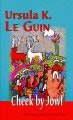
Ursula LeGuin knows about delicious words, and how to put them together into a satisfying meal. When I reintroduced chapter books into bedtime this year, I did it with my favorite books; her Wizard of Earthsea was the second book I read and it cemented the boys' love of this routine. Her fiction is still on my "grab on sight" list, but I also enjoy her essays about writing, either her own writing or other people's books. I stumbled across a little volume made up mostly of speeches she gave to various book-related places, so I ordered it from my library and had some delightful reading about the importance of words, of story, of imagination.

The title of Cheek By Jowl comes from the longest essay, which discusses animal literature, from animal biographies and friendships with people through fantasy and myth. It made me want to reread a lot of books and read a few for the first time. I'm going to investigate more to see if there are other books like this waiting for me. A.

Thursday, December 31, 2009

Uncle Boris in the Yukon: Unusual U Day


Technically it is now Thursday, but my internet went out last night when I tried to post this. It's was A-Z Wednesday (from Reading on the Beach), so I'm highlighting a Daniel Pinkwater book, Uncle Boris in the Yukon.

It took me a while to realize that this was a memoir, not another Pinkwater story of a quirky family. And since I've heard Pinkwater on the radio, I heard the stories in his rich, ironic tone, which only added to their strength. His history of his life with dogs, from childhood with his horrid family through raising sled dogs with his wife, is funny throughout and touching frequently. His awful parents make sense of the many strange adults that people his children's books, and the cheerful way he approaches his life is echoed by many of his protagonists. I recommend this book to all dog lovers and Pinkwater fans.

Sunday, October 11, 2009

Be Afraid


I like reading nonfiction, not only because I learn interesting things but because it makes me feel my brain isn't atrophying. See -- I'm smart! I can read big words even. Sadly, this helps me clear many books that otherwise would not survive my terrifyingly short attention span.

The Science of Fear, by Daniel Gardner, provides a fresh description of how our unconscious rates fear and worries, and how little control our conscious and rational mind has over this. The first chapters describe how this fear setting is reached, and the later chapters cover how this results in a bad estimate of danger from various modern problems (cancer, terrorism, pornography, etc.). Gardner makes a distinction between your mind and your gut, or conscious and unconscious decision making, and shows how gut tends to win, with mind frantically coming up with reasons to match gut's opinion. Even knowing how gut makes these decisions (familiarity, affection, etc.) usually doesn't offset its influence. And modern times, with its variety of sensation-seeking media outlets, provides all sorts of bad data to our naive but influential gut.

I liked this book because it said what I like to hear (and the book discusses how much that has helped me decide it is true) and because it goes into detail on how particular menaces loom larger than their numbers justify. But it is rather repetitive; if you read an excerpt or skim a few chapters you'll get the gist. B

Heh heh. Funny internet note -- the book jacket refers me to www.dangardner.com for more info, but that goes to a pop singer's website. Danger Dan is CANADIAN -- www.dangardner.ca.

Friday, June 26, 2009

Reading With My Eyes Shut

Debra Gwartney's memoir, Live Through This, tells with stark honesty the years Gwartney's two oldest daughters spent running away from home. After a fairly bitter divorce, Gwartney moved with her four daughters to Oregon, far from the girls' father. Amanda and Stephanie drifted into the local Goth scene, then the drug scene, and from there into spending nights away from home, and eventually into running away for months at a time. Gwartney watched helplessly, unable to reconnect with the girls, and struggling with mounting anger for the pain and anguish and fear they were putting her and their younger siblings through. At the same time, she documents how her anger with her ex-husband twisted their loyalties and possibly contributed to their alienation.

I read this book backward, because it pushed so many buttons of mine. I'd read a few chapters, then skip to the end to make sure the kids turned out all right. Then I'd back through their lives. I found myself angry with both the mom and the daughters for the hurt they were selfishly piling on each other. But the honesty of the writing kept me turning the pages. The mistakes were real, and the love was strong. And yes, they live through it.