Showing posts with label 2011 Global Reading. Show all posts

Saturday, December 31, 2011

Library Returns Today!

A shelf of books had to go back to the library today because of tedious things like due dates and other people's holds.  And then I went off to Utah for vacation.  But here are some swift reactions to the books they got back.

Book From My TBR List:
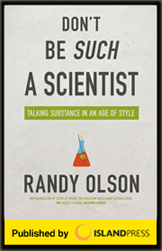
  • Don't Be Such a Scientist, Randy Olson.  Written by a marine biologist turned semi-successful movie producer, this polemic against boring attempts at persuasion looks at traditional ways of conveying information and laughs with scorn.  Too often scientists use the same protocols for public speaking that they do for research proposals, sometimes salted with contempt for their audience and general arrogance.  Olson suggests this may not be as effective as they seem to think.
Books From Reading My Library:
Border Crossing: A Novel
  • Border Crossing, Maria Colleen Cruz.  Twelve year old Cesi Alvarez would be a good friend to Keeper, since they both have the common sense of a newt.  Apparently no one ever told her that Mexico is a different country than the US.  It tries to be a cute story about a girl understanding her heritage, but it relies heavily on willful and strident stupidity from Cesi.  Luckily she sits next to her long-lost cousin on the train, much as a mermaid steers Keeper home.  But it completes North America for my Global Challenge!
  • Liberty Porter: First Daughter, Julia Devillers.  Nine year old Liberty looks forward to her new life in the White House, but first she has to straighten some things out with her dad's PR tool.  Cute and bouncy story that I think my fifth grader would like.  Also doubles as a location book for Washington DC, SCORE!
State Books:
    How Tía Lola Ended Up Starting Over, a book for young readers by Julia Alvarez
  • How Tia Lola Ended Up Starting Over, Julia Alvarez.  A blended family starts a B&B (or C&C&C) in VERMONT.  I liked the way the two families and their extended friends interacted and the conflict from the mysterious ill-wisher kept things interesting.  The sudden U-turn in the last few pages threw me violently out -- why suddenly tell me this is a book from a library and the characters aren't real?  I mean, I KNOW that...
  • Popcorn Days and Buttermilk Nights, Gary Paulsen.  City living has poisoned Carley, so that he intermittently erupts in meaningless acts of violence.  His mom ships him to northern MINNESOTA to spend time in the country, where he learns about beauty and hard work and grinding poverty that gets alleviated with genius and more hard work.
Vampire Literature Books:
  • The Vampire Defanged, Susannah Clements.  A review of vampire literature from Dracula through Sookie Stackhouse, looking at how Christian themes first dominated the literature and then gradually become replaced with more secular interests, paralleling the change from horrible monsters to sexy man-friends with an edge.  Clements thinks the genre would benefit from a return to a harder edge, which would also allow the Christian themes more room to thrive.
Books From My Favorite Authors
  • I read Tempering of Men by Sarah Monette and Elizabeth Bear just as the news of Anne McCaffrey's death come out, and it's an interesting homage to the Dragonrider books.  These men bond with their wolves, but the wolves are the dominant end of the equation, and the men adjust their lives to accommodate the wolves more than vice versa.  Sex gets complicated, for example.  And just as in later Pern books, these men are also facing the results of success -- they have beaten back the main threat that led to the pairings, so are they even necessary?  And what happens if the man you love doesn't love you back?

Alphabetically Scrambling to Finish off 2011

Things have been quiet around here as I try to finish up my last challenges while still celebrate the holidays with my family.  Now I'm holed up alone in my room chasing down the last few pages.

The A-Z challenge had a few leaves that were hard to shake from the tree, but I've finally knocked them down.  Coincidentally they also helped me round out the Global Reading Challenge, which was looking a bit anemic. During the holidays I've read the following on my NOOK, completing the A-Z challenge:
  • Jasper Jones, Craig Silvey.  An Australian coming-of-age story where the narrator learns about the fronts put on by everyone around him, proving that he doesn't have to doubt himself if his own courage and self-confidence aren't always bone deep.  The twin mysteries of his parents' marriage and the murder of a school mate implicating the notorious Jasper Jones provide the lens focusing these revelations, as well as the minor bits of plot that accompany the journey of interior growth.  I also learned a lot about cricket.
  • Wife of the Gods, Kwei Quartey.  Darko is a police detective in Ghana, where modern investigative techniques run parallel to rougher, simpler modes of justice, with magic and witchcraft lurking in the corners.  Darko's sense of fair place and justice stem from his own mother's disappearance, and the chance to solve a murder in his mother's home village also gives him the chance to peer into his own family's secrets.  An interesting glimpse into Ghana culture as well as a detective story.
  • The Space Between Us, Thrity Umrigar.  Rich Parsis and poor Hindu workers may think that their friendship can transcend an employee-worker relationship, but the rich will betray the poor every time.  Poor and uneducated people always lose, and it's because their poverty leads them open to bad choices based on smaller understanding.
  • One Man's Bible, Gao Xingjian.  Another book translated from Chinese that felt like it was written behind glass -- somehow I've never been able to connect with any I've tried.  It didn't help that women in this book were considered alien creatures there to either inspire lust or to fail miserably in that purpose.  The tricks with pronouns didn't illuminate much to me; the whole book felt false so the changing identities didn't resonate deeply.  The parts set in the past at least gave a sense of setting and reality, as opposed to the much vaguer parts in France or other western cities.  As a "fictionalized account" of the cultural revolution it worked better than as a "meditation on exile" and "the essence of writing" (from the B&N description.)

Thursday, December 1, 2011

She's Gonna Blow: Boiling Point

Well, it turns out that in the normal course of events I don't read much South American fiction.  So I had to go out looking to have any hope of finishing my Global challenge.  It's surprisingly hard to find fiction books by continent; nonfiction is easy enough but turns out I foolishly signed up for a challenge that wants novels.  I may cheat a bit.

Anyway, poking around in the online catalog brought me to Boiling Point by Karen Dionne about a bunch of earnestly idiotic environmentalists who rush to an erupting volcano in Chile.  The volcano, Chaiten, is real and did erupt in 2008, with just enough warning to allow the nearby villagers to flee without any belongings, but all the scientific tourists in the book are invented.

It says bad things about me, but the high body count really endeared the book to me.  In the middle I was staring at some of the characters thinking "you are just too stupid to live" and it turns out that the author agreed with me!  They don't get away with their foolish decisions.  Which makes things a lot more fair, really.  The book also lays out some environmental questions and some thoughts on personal responsibility, but the focus is on the danger from the lava and the sulphur and the VOLCANO.

Saturday, November 19, 2011

Juicy Pulp: Doc Wilde and the Frogs of Doom


If I ever get to go back to homeschooling, I have a new handbook.  Among the many delicious asides in the wildly goofy and pulpy Doc Wilde and the Frogs of Doom by Tim Byrd are many descriptions of the lessons learned by the young explorer siblings Brian and Wren Wilde.  Twelve year old Brian gets introduced while translating an ancient Greek text, only to squabble with his younger sister over some vocabulary.  They trade insults in four languages from three continents, then thankfully hear the call of another adventure beginning.

Of course they are both martial artists as well as young scientists, mathematicians, and philosophers.  They can't help but be modest in the shadow of their superlative father, who is ably assisted by several side kicks.  The family chases about a secret South American volcano in battle against the wily and inter-dimensional frogs in an rollicking adventure helped along by cheerful cliffhangers highlighted with bold fonts and text balloons.  My seventh grader delighted in the short romp, and my fifth grader wants to try it out as well.  As a final spice, I am claiming the book as a South American novel, so it works for a neglected challenge.  Another fun selection from my Reading the Library journey.

Tuesday, November 15, 2011

Extended Family: Anna Hibiscus

I am chasing down the finish line of the Cybils challenge, although I don't have much low-hanging fruit left.  A quick lap came with Anna Hibiscus by Atinuke, my penultimate read in the Early Chapter Book finalists group.  I've had this on hold for about eight months now; it was one of the books I requested my library buy (King County Library is awesome in many ways) and the first one to magically show up in my hold list because I had asked them to buy it.  Computers are nifty.

It's a gentle read about Anna Hibiscus and her life among all her brothers and cousins and aunts and uncles and grandparents in their sprawling family home in Africa.  She goes on a holiday, meets a new aunt, learns a lesson, and gets a wish granted in four chapters liberally illustrated with cosy black and white depictions of the events.  A few times the lessons learned grated for me -- her parent's wish for a private vacation is revealed as foolish and nearsighted, and the problems of space available in a small holiday cottage are ignored out right.  But I doubt kids will mind; they will have too much fun watching the parents stumble about making mistakes that only more family can fix.

I'll offer it to my kids to see how they like it; it's a fun child-eyes view of life in another country.  Unfortunately they are all dragging their feet because of the obvious lack of robots or dinosaurs in the book, but I will keep trying.  After all, X will read anything.

Monday, October 31, 2011

Personal Battles: Curfewed Nights

Basharat Peer's memoir Curfewed Night gives a journalist's account of growing up in Kashmir, a contested territory where bombings and disappearances gradually become so commonplace they almost seem an invisible part of life.  Peer describes his childhood, starting from before he really understood any of the politics and just before those politics became deadly; as he moves into adolescence and the conflict becomes violent he encounters military barricades, mandatory identify cards, armed searches, and friends disappearing to join the insurgents. His gradual understanding and growth in both experience and perspective helped me comprehend the situation, since I came to the book with a very limited knowledge of the history of Kashmir and its role in the Indian-Pakistan wars.

The second half of the book follows Peer's active attempt to understand what was happening to his country and to the people in it.  After he graduates and works in Delhi as a journalist, he decides to leave his job and write about his homeland.  He mentions the uncertainty of going from a salaried position to free lance work, but concentrates more on the issues facing the people he interviews, from parents of people killed (by both insurgents and the Indian army) to current and ex- warriors to people trying to navigate a life in between the restrictions and bombing.  He faces his own involvement as well, admitting that he isn't dispassionate and sometimes can't ask the questions his training prompts him towards because of the insensitivity required. His subjects are his peers and friends before they are witnesses, and he tells their stories from the inside.

I felt Peer gave a good introduction to the situation, one that gave me a sense of the many aspects of the situation and showed me hints of where I needed to know more of the history and personalities to really understand why the fighting continues.  I think I had picked this book because of my Global Reading Challenge, but actually it doesn't count since it's not a novel.  I'm still glad I read it.

Friday, September 16, 2011

Short Stuff: The Duel

Duel
I've been keeping on track with reading a book a day for a while now, but this weekend will stretch me -- I'm spending Friday and Saturday at Foolscap talking about books instead of reading them, and then Sunday is the big Boffer Party to celebrate X's entry to teenagerdom, Kevin's entry to old age, and Pirates! So I'm cheating by reading very short books, in particular short books that won prizes for best kidlit translated into English.

Today's book was Duel, by David Grossman, winner of the 2000 Marsh Award, translated from Hebrew by Betsy Rosenberg.  It's a standard fifth grade type book, with a kid dealing with a tough situation and succeeding.  I ate these books up with a spoon in my day, and would have devoured this one with extra pleasure for its setting in Jerusalem and interesting bits about histories I'm still unfamiliar with.  It's a kid watching two elderly men fight -- one literally challenges the other to a duel with pistols at noon, and the boy finds a way to stop the fight, and reading it gives hints about life in Israel in the 60's (when the book is set) as well as thirty years earlier -- I hadn't known that women seen fraternizing with the British would have their heads shaved.  I'd leave the books out for my kids to read except that it's due already.

Thursday, September 15, 2011

Math Geek: Toby Alone

Timothee de Fombelle's Toby Alone is an ambitious kidlit book that tackles tough issues such as child abuse, environmental abuse, bullying, responsible scientific discoveries, xenophobia, young love, betrayal, and death, but my immediate response is that the math doesn't add up.  This is because I am a shallow math geek.  See, Toby is repeatedly stated to be less than two millimeters tall, but then the size of the leaves and bugs around him don't make sense, and the distances between characters also don't work.  The author has a disconcerting habit of giving these numbers precisely (he was only two millimeters away or something) but if the people are less than two millimeters tall, someone standing that far away isn't exactly in someone's personal space.

I also found Toby hard to like.  Yes, he was smart and athletic and cunning and limber, but all these super powers just made him dull.  Good people loved him, bad people hated him, weak people betrayed him but then felt bad about it.  Whatevers.  No one seemed worried at how unforgiving or arrogant he was.  When the final pages of the book frantically set things up for a sequel, I didn't have the heart to follow him around anymore.  Maybe I just don't have a French sensibility.

Monday, July 4, 2011

Giddy-up With a Splash: Whale Rider

I listened to The Whale Rider by Witi Ihimaera because of the 48 Hour Reading Challenge.  I had picked out a few audio books because I wanted to be able to keep reading even if I had to drive anywhere.  As it turned out, I basically stayed home for the weekend except for one quick pickup, so I only got about fifteen minutes in.  At first my kids were listening in, but I spend a lot more time in the car than they do, so they fell behind.  By the time I got to the whales dying on the beach scene, I was fairly glad they had.  I'm not sure I could handle watching them listen to the death of the whales.

Usually I only listen to books I've already read; I dislike the lack of control I get from an audio book; the narrator doesn't speed up or slow down at my mental commands, which I do a lot when reading a book.  But I enjoyed this one, maybe because I'm a sucker for non-American accents, and I found the description of Maori life in transition enough to grab my attention even in the staccato rhythm of listening to a story on my mainly short jaunts across town.  Strangely, my favorite sections were the ones in Australia and New Guinea, which I guess makes sense given my single complaint.

The appendix said that the author wrote this book for his daughters, but there is a real dearth of female agency in the book.  Kahu doesn't make many decisions, just quietly tries to please her grandfather and quietly accepts his contempt for her as just.  Even her final moments of mounting the whale seem passive, as if she is following a script destiny laid for her.  I much preferred hearing about the narrator growing up, learning more about his traditions, going abroad to work and then returning home, with his compassionate but nonjudgmental view of the grandfather's unfair treatment of Kahu.  I've never seen the movie, but I see it's streaming on netflix so I guess I'll give it a try.

Thursday, June 30, 2011

Hit and Miss: Strange Blood

The Take a Chance 3 challenge has several options that use a web page offering to select your book.  Whichbook has the most interesting method -- by selecting your preference along a variety of axis the site finds a book with elements you like.  There are twelve options (happy/sad, safe/disturbing, gentle/violent, and so on) and you can set up to four of them and then ask for the recommendations.  Or you can switch to the other screen and call for a book based on character, plot, or setting options.

cover
I used the form a month or so again and have completely forgotten my selections, although I remember that I had to fiddle with them a bit because my first choices had no matches.  Proof that I'm weird, I suppose.  But finally the all-knowing computer spat out Strange Blood: A Crime Novel (Forensic Psychologist Megan Rhys Crime Novels) by Lindsay Jayne Ashford, so I spoke to my libraries computer and had it sent over.

Strange Blood is the second book about Dr Megan Rhys, a Welsh forensic psychologist called in by the police during violent murders.  Ashford moves around a bit, putting her spotlight on various people, and each time getting intimately inside the character's viewpoint so that I quickly felt I knew them, even as they made mistakes.  The crime fighters have lives outside their jobs; Rhys worries about her new boyfriend, both about his loyalty and whether her family and colleagues will approve; her sister is as important to her as the case, and when those two worries start to collide she reacts instantly.  Occasionally we dip into the killer's mind too, so we know that more badness is coming.

I liked the sense of the detectives and reporters as people, but I found some of the suspense manipulative.  There conflict with the boyfriend seems forced, and I found myself unsympathetic with Rhys's reaction.  Although I liked the individual scenes and found hte characterization skillful, I'm not enough of a crime fan to want to continue, despite the enjoyable loose ends left by the author (I dislike books that magically tie everything up).  Also, the main motivation of the bad guy was that he was crazy, which is a bit weak.

Saturday, June 4, 2011

Book 4: Baking Cakes in Kigali

I'm amazed at how many of my books this year are shelved in adult fiction, not SF or YA or children's.  Almost half!  Well, a third.  More than one!  Including this one, Baking Cakes in Kigali, by Gaile Parkin, which follows Angel, grandmother and wife and cake-making entrepreneur, as she lives and works in Kigali.  The different themes of the book wind about themselves, as she deals with menopause, stress over her dead children and the grandchildren she is raising, problems and celebrations of her clients, and the wedding of a close friend.  It's a cheerful glimpse into a wise woman's life, although that's not at all how Angel thinks of herself.  Thanks to BookNAround for bringing it to my to-read list.

Saturday, May 7, 2011

Less Challenging: 2011 Global Reading Challenge

My current global reading challenges asks both for authors from different countries, but also for books I can share with my kids.  This turns out to be hard, even if I count books I try and fail to share with my kids, and counting books when I can't tell where the author originates frustrates me.  Since my general approach to challenges is to avoid being actually challenged, I need a new list to use when books are useless for my read-American challenge (Where Are You Reading?).

Luckily the 2011 Global Reading Challenge fits right in.  At the Expert level, it asks for three novels from each continent, with an extra continent thrown in for those space-station kind of books.  I am of course back-dating all my reading so far, or at least the books that I consider real novels and that take place somewhere.  I'm going to try not to count books set in the US, so I hope Canada or Mexico come through for me.

Africa
Asia
Australasia
Europe
North America
  • Victim Rights (Canada). Hey, I forgot to review this!
  • Hammered (Canada: Ontario)
  • Border Crossing, Maria Cruz (Mexico) (a real novel)
  • Born to Run (Mexico)  (technically not a novel)
South America
Seventh Continent
21/21